

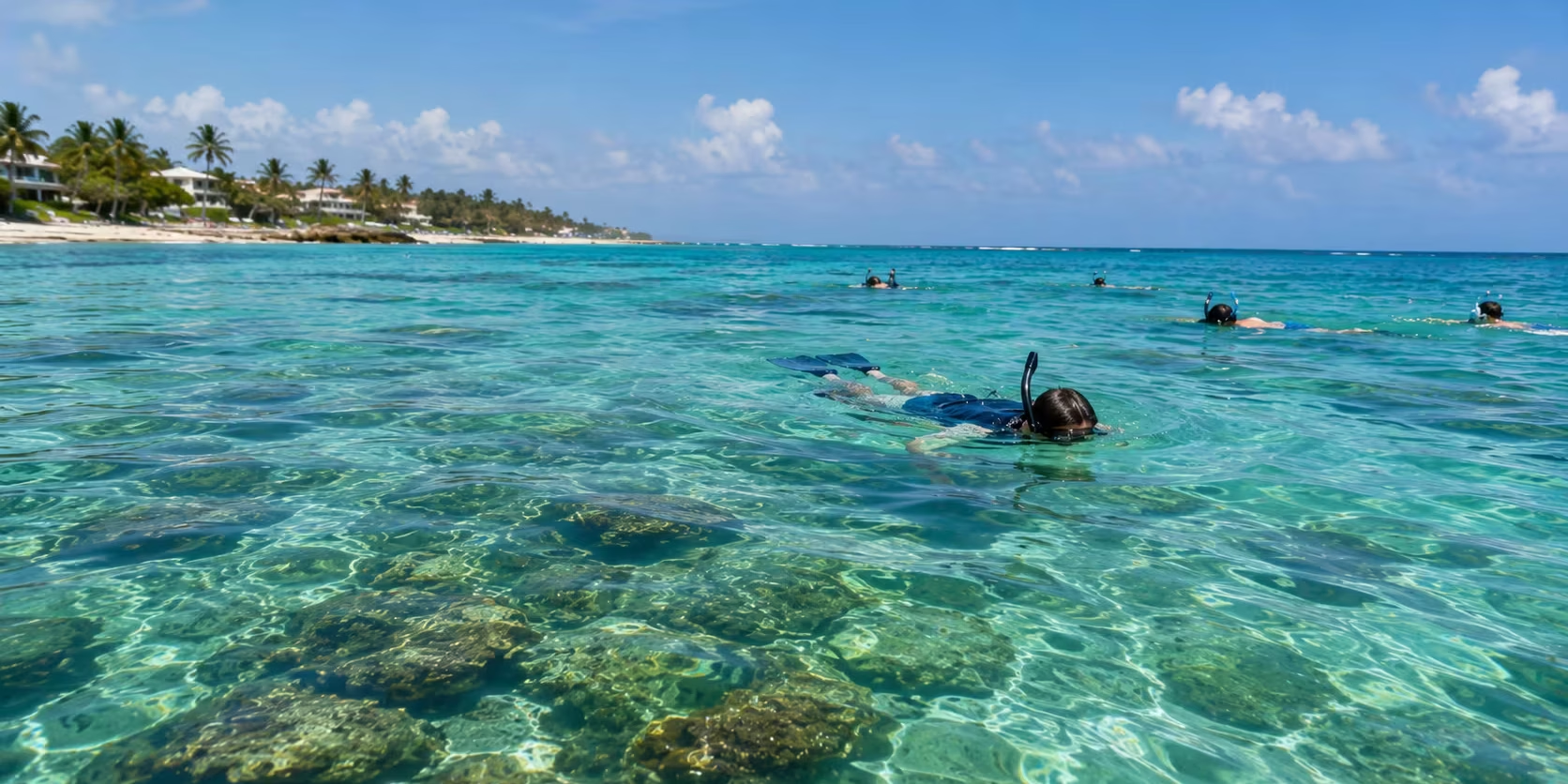
Picture this: you walk off a warm, sandy beach, slip into clear Atlantic water, and within five minutes you're floating above a living coral reef full of tropical fish, sea turtles, and the occasional nurse shark. No boat ride. No expensive charter. Just you, your mask, and the ocean.
That's snorkeling in Lauderdale-by-the-Sea — a small beach village 15 minutes north of downtown Fort Lauderdale that happens to be one of the best shore-access snorkeling spots in the United States.
Whether you're a first-timer with kids in tow or an experienced snorkeler looking for your next reef, this guide covers where to go, when, what it costs, and what you'll see.
Why Lauderdale-by-the-Sea is a top snorkeling destination
There are plenty of places to snorkel in Florida. Key Largo gets the headlines. But for pure accessibility, Lauderdale-by-the-Sea quietly wins — and it isn't close.
This small beach town is known as Florida's Beach Diving Capital, and the title is earned. Unlike the Keys, where the reef sits roughly five miles offshore and requires a boat, the reef here starts just 100 to 400 feet from the sand. You walk in from the beach.
Park the car, cross the sand, wade into the Atlantic, and within minutes you're above living coral that rivals anything on a Caribbean trip. No dock, no seasickness, no boat ticket.
What makes the snorkeling here different:
- Three parallel reef lines, the first within roughly 100 yards of shore
- A dedicated shipwreck snorkel trail — one of the only ones in Broward County
- Warm water year-round, with summer visibility reaching 50 to 70 feet
- Shallow depths of 8 to 20 feet, ideal for beginners and families with young kids
- Everything reachable without a boat, a wetsuit, or any certification
If you want to go deeper — the SS Copenhagen wreck, the second reef line, night dives — that's scuba territory, and it needs a boat or a certification. See our guide to scuba diving in Lauderdale-by-the-Sea for those. This guide sticks to what you can do with a mask, a snorkel, and a pair of fins.
The best snorkeling spots in Lauderdale-by-the-Sea
The village isn't big, but there are several distinct spots along the coast, each with its own character. Here's where to go.
The shipwreck snorkel trail (best for beginners and families)
If you snorkel one spot here, make it this one. It's close, it's shallow, and it's full of fish.
- Location: Just off Datura Avenue, about a 5-minute swim from the beach
- Depth: 8–10 feet
- What you'll see: Replica 19th-century artifacts — concrete cannons (two on the north side, three on the south), a large anchor, and ballast stones — within a compact area of roughly 100 by 20 feet
- Marine life: Arrow crabs, scorpionfish, lobster, eels, nurse sharks, turtles, rays
Fun fact: The trail was dedicated in 2002 by Jean-Michel Cousteau, son of Jacques Cousteau. It's one of the only dedicated snorkel trails in Broward County.
At 8 to 10 feet deep, kids and first-timers can snorkel it comfortably. The water is warm, the swim is short, and there's always something to look at.
The first reef line
The first reef runs parallel to the beach about 100 yards out. It's deeper — 12 to 20 feet — but still well within range for most swimmers.
- Depth: 12–20 feet
- Distance from shore: Roughly 100 yards
- Features: Coral heads rising 3 to 4 feet off the bottom, with a "Swiss cheese" rock structure full of crevices
- Best for: Swimmers comfortable a short distance from the beach
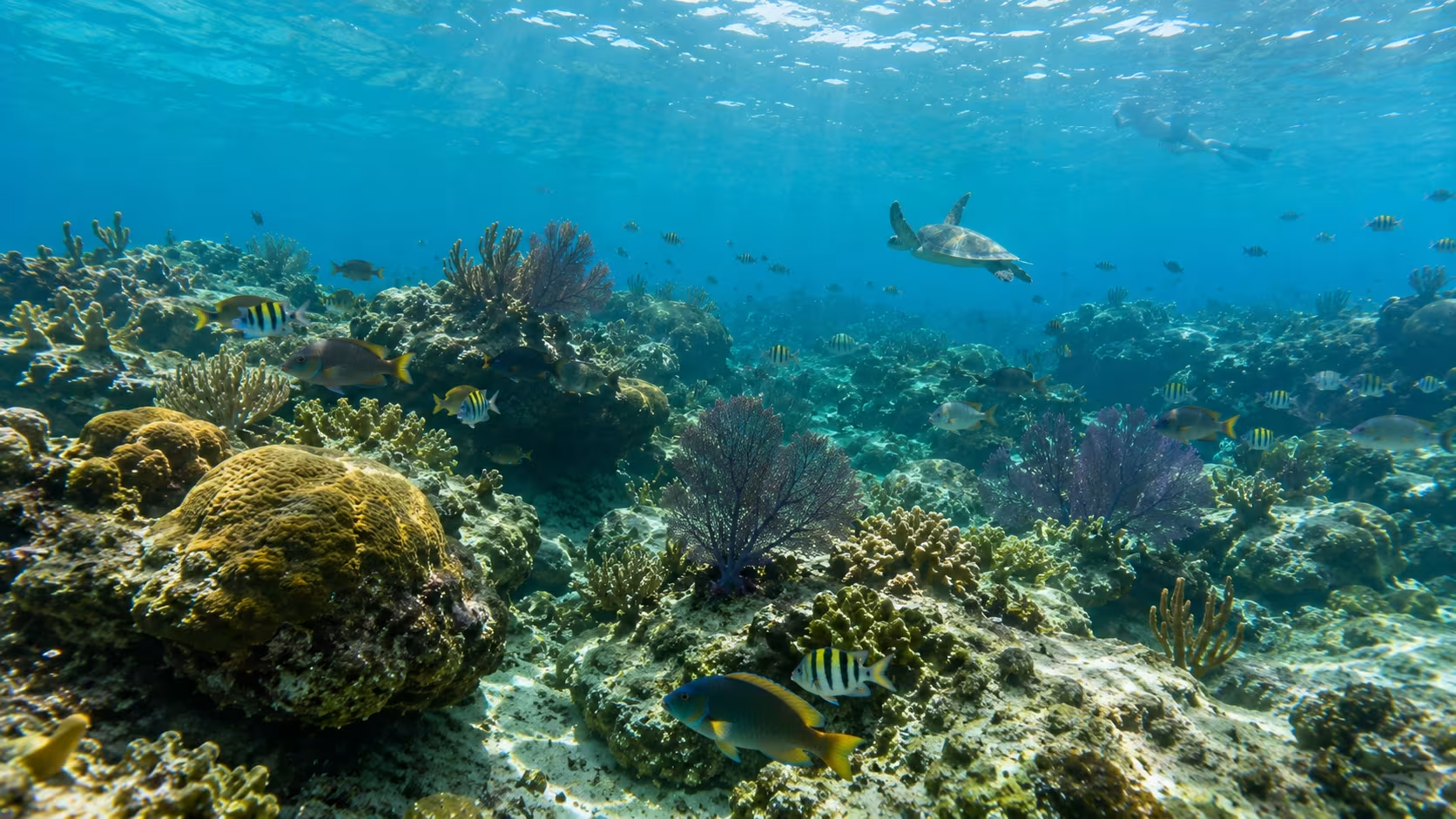
This is where the reef really starts to impress. Brain coral, star coral, and purple sea fans swaying in the current. The crevices are loaded with grunts, snappers, blennies, and sometimes a moray eel watching from a ledge.
The potholes, south of Anglin's Pier
An underrated spot that locals love. Between the wreck trail and the second reef, just south of Anglin's Pier, these natural depressions act as a nursery for juvenile fish.
- Natural potholes sheltering juvenile fish
- Good for spotting parrotfish, tarpon, and schools of baitfish
- An unusual ecological feature you won't find at most snorkeling spots
If you have curious kids who like learning about ocean ecosystems, this is fascinating. Watching tiny fish dart in and out of the shelters is a good reminder of how alive this reef is.
Vista Park
A good option if you want a quieter session. The reef here sits roughly 1,000 feet — about 330 yards — offshore, with colourful tropical fish, brain coral, and the occasional turtle.
Worth choosing when the Datura Avenue entry feels crowded. The visibility is just as good and the atmosphere is more relaxed.
The second reef line — for strong swimmers only
Heads up: The second reef sits at 30 to 50 feet deep and is roughly a 30-minute swim out. That puts it beyond casual snorkeling range. If you're a beginner or you're with kids, stick to the first reef and the wreck trail. Most people who visit the second reef do it on scuba, from a boat.
Marine life you'll see while snorkeling
The biodiversity here is genuinely impressive. Here's what to look for.
The coral itself
- Star coral — massive boulder-like formations that anchor the reef
- Brain coral — unmistakable, with a maze-like surface
- Finger coral — delicate branching structures
- Purple sea fans — swaying in the current
Tropical fish
- Schools of grunts, snappers, and parrotfish — constant
- Sergeant majors — the yellow-and-black striped ones that greet you first
- Blennies and juvenile drumfish — tucked into crevices
- Trumpetfish — long, slender, often hovering vertically
- Tarpon and barracuda — bigger, more dramatic sightings
The bigger sightings
- Sea turtles — frequently seen grazing on the reef. The most common "wow" moment, and worth the trip on its own
- Nurse sharks — often resting under ledges. They look intimidating but are docile; just don't touch or corner one
- Stingrays — gliding across the sand between coral patches
- Moray eels — watching from the crevices
- Octopus — if you're patient, you might catch one changing colour
- Eagle rays — less common, unforgettable when you see one
- Manatees — occasional sightings in late winter and early spring
On the wreck trail specifically: Look for arrow crabs, scorpionfish, and lobster among the replica artifacts. The concrete structures create sheltered habitat that attracts species you won't spot on the open reef.
When to go, beach access & how long it takes
Snorkeling here works year-round, but conditions vary by season. The sweet spot is April through September: warmest water, calmest seas, clearest visibility.
Seasonal conditions
| Factor | Summer (Jun–Sep) | Winter (Dec–Feb) |
|---|---|---|
| Water temperature | 82–86°F | 70–74°F |
| Visibility | 50–70 ft on calm mornings | Reduced after storms |
| Currents | Light, predictable | Stronger after cold fronts |
| Waves | 1–2 ft or less | Larger swells possible |
Spring and fall sit in between — water at 75 to 82°F, generally good visibility, and noticeably smaller crowds than peak summer.
The best time of day
- Early morning is best. Calmest surface, clearest water, no crowds. In by 8 or 9 a.m. and you'll have the reef nearly to yourself.
- Best tide: Incoming. It pushes cleaner offshore water toward the reef and noticeably improves visibility.
- Avoid: Outgoing tides, and the days right after heavy rain or a winter storm.
Pro tip: On a calm summer morning with an incoming tide, visibility can hit 50 to 70 feet. That's exceptional for shore snorkeling anywhere.
Beach access points
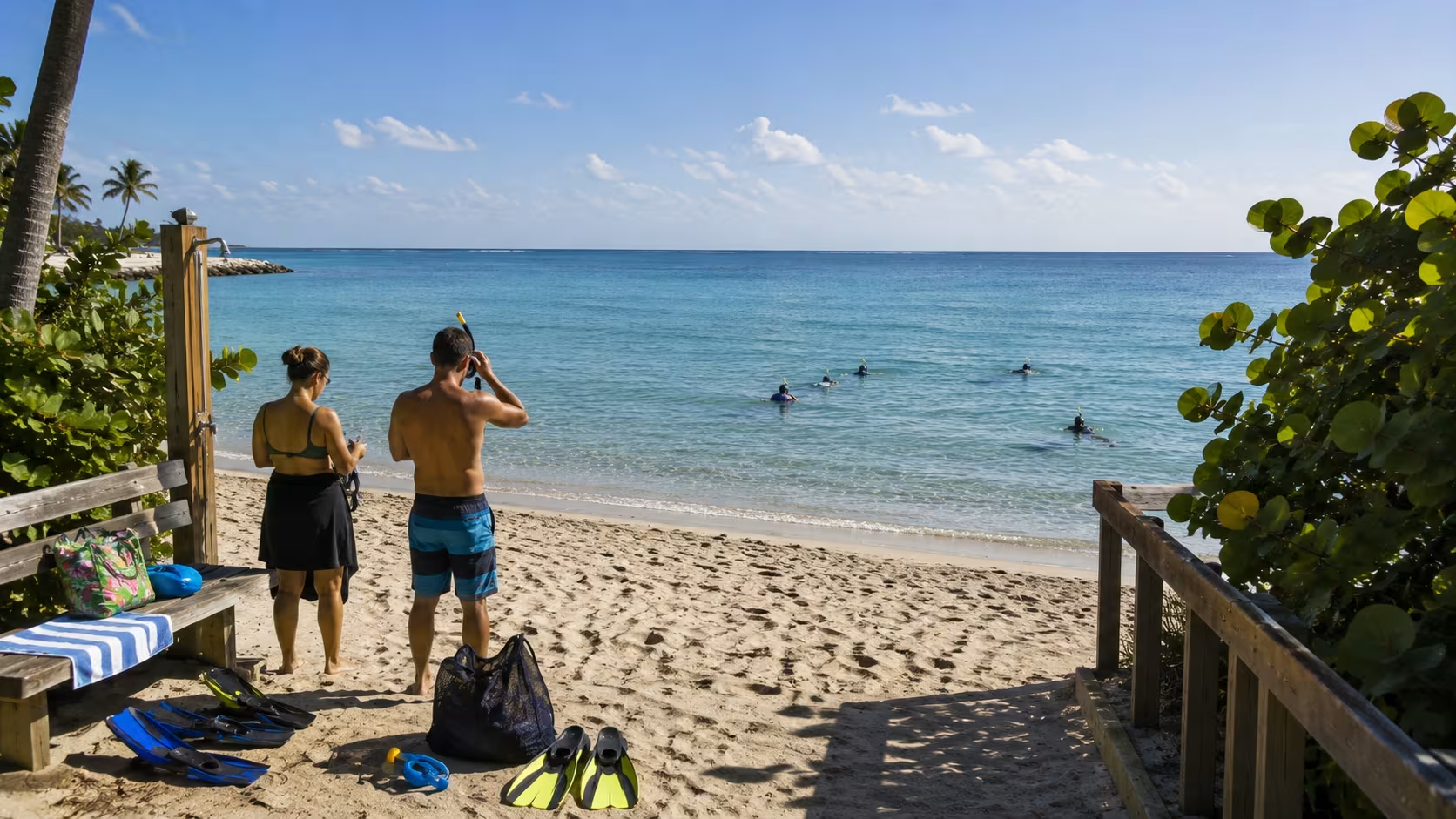
All the entries are along El Mar Drive, and the town has installed benches and rinse stations. Three main access points:
Datura Avenue (most popular)
Datura Ave. and El Mar Dr. Shortest swim to the wreck trail, with a tank rack and rinse stations. Metered parking that fills up fast — arrive early, especially on summer weekends.
Hibiscus Avenue (quieter)
Hibiscus Ave. and El Mar Dr., south of Commercial Blvd. Less crowded, with a short swim to the first reef. Metered parking.
El Prado Park (most parking)
North of Commercial Blvd. The best bet when the other lots are full, with access to the northern stretch of reef.
Parking: Everything is metered. Use the PayByPhone app rather than fumbling with coins while holding a mask and fins — and arrive early on weekends.
How long does snorkeling take?
- In the water: 1–2 hours is typical
- Total outing including parking and gear: 2–3 hours
- Guided tours: about 90 minutes
The wreck trail is a 5-minute swim from the sand, so even a short session is worth it. You can snorkel in the morning and still have the whole afternoon for the village, lunch, or a trip downtown — which is exactly why this works so well with kids.
Guided tours, gear & safety
If you're new to snorkeling, nervous about open water, or bringing kids, a guided tour is the easiest way to see the reef. Even experienced snorkelers benefit from a guide who knows where the turtles are that morning.
What to expect on a guided snorkeling tour
- Duration: About 90 minutes
- Includes: Mask, snorkel, fins, and a dive flag
- Price: From around $79 per person
- Guides handle instruction, lead you to the best spots, and help identify marine life
- Some operators offer secure storage for phones, wallets, and keys
- Arrive at least 10 minutes before your start time
Booking tip: Tours fill up on summer weekends and holidays. Most operators offer 24-hour cancellation for a full refund, so there's little risk in booking early.
Weather and cancellation
Most operators refund in full with 24 hours' notice, and will contact you the morning of if the weather turns. Tours generally depart 20 minutes after the scheduled start whether or not you've arrived, and everyone signs a waiver before entering the water. Policies vary by operator — confirm when you book.
Snorkeling gear and rentals
- Minimum gear: Mask, snorkel, and fins — rentable locally or included with a tour
- Dive flag: Required by Florida law to alert boaters. Rentable from local shops
- Reef-safe sunscreen: Mineral-based, with zinc oxide or titanium dioxide
- Rashguard or shorty wetsuit: Optional in summer, worth it in winter when water drops to 70–74°F
- Snorkel vest: Good for buoyancy and confidence, especially for kids and beginners
Gold Coast Scuba, on Commercial Boulevard, is walking distance from the beach access points. Force-E, in Pompano Beach and Fort Lauderdale, is another option. Both rent everything and can tell you what conditions and visibility look like that morning — worth the stop.
Safety basics
- Always use a dive flag. It's the law, and it keeps boats away from you
- Snorkel with a buddy, especially with kids
- Watch for currents. If you feel a pull, swim parallel to shore, never against it
- Check conditions first: calm seas at 1–2 feet, light wind, incoming tide
- Don't touch the coral. More on that below
Snorkeling with kids
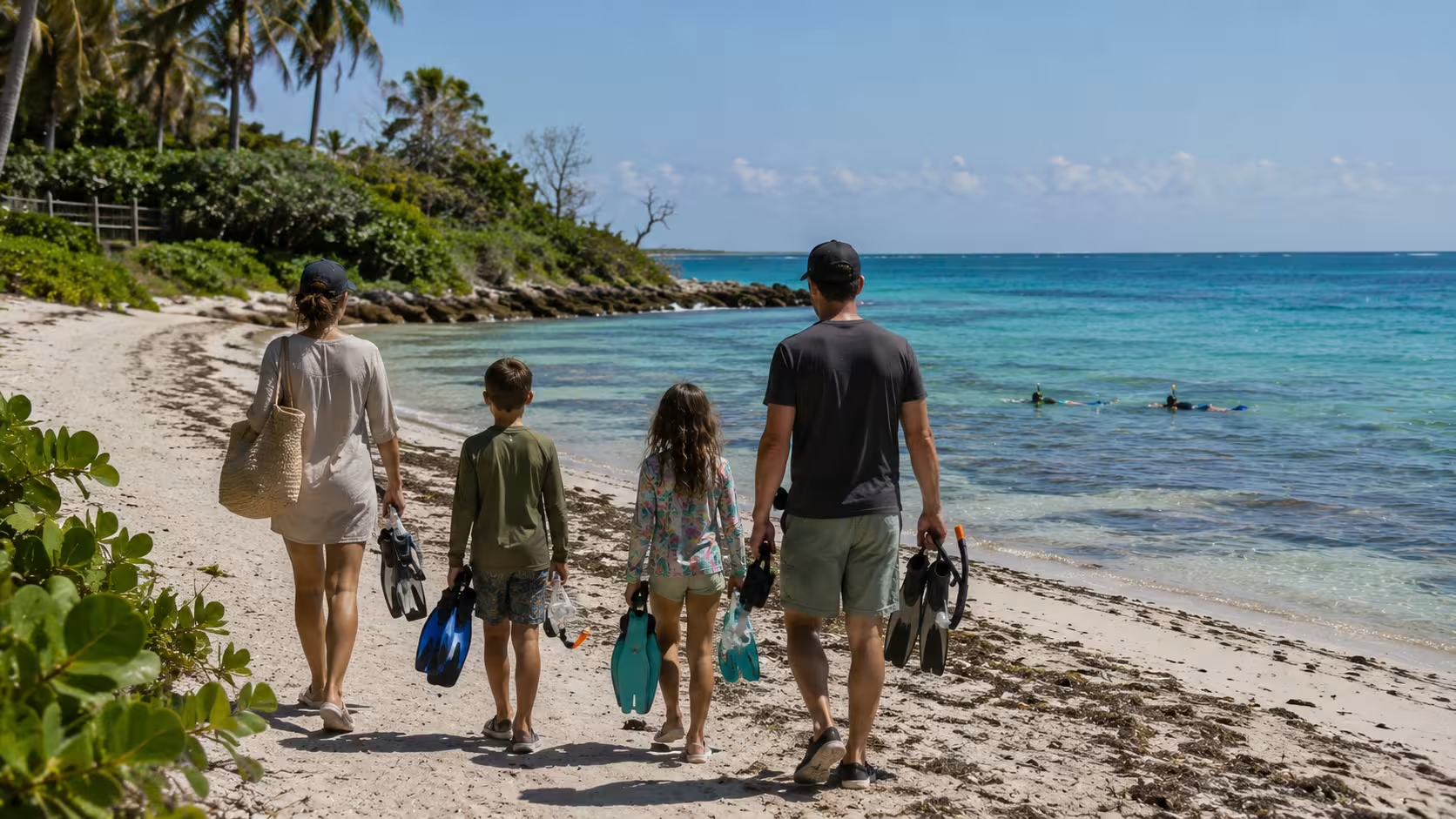
If you're a parent wondering whether this is actually manageable with young kids: yes, and it's one of the better shore-snorkeling spots in South Florida for exactly that.
Why it works for families:
- The wreck trail is only 8–10 feet deep and closest to shore
- The swim out takes about 5 minutes
- Summer brings the calmest water, warmest temperatures, and gentlest currents
- Guided tours welcome families and nervous swimmers
- The marine life is easy to spot — kids go wild for turtles
Tips for snorkeling with children
- Use snorkel vests for buoyancy and confidence. Even strong young swimmers benefit in open water
- Book a guided tour for the first outing. Guides carry the gear and know how to keep kids engaged
- Start at the wreck trail — closest, shallowest, most rewarding for short attention spans
- Go in the morning when the water is calmest and clearest
- Bring water shoes for the rocky entries
- Practice in a pool first if they've never worn a mask. Getting comfortable with breathing through a snorkel makes all the difference
Costs, the Keys comparison & reef etiquette
| Expense | Estimated cost |
|---|---|
| Beach access | Free |
| Gear rental (mask, snorkel, fins) | $15–$35 per person |
| Dive flag rental | $5–$10 |
| Guided tour (90 min, gear included) | From ~$79 per person |
| Metered parking | $2–$5 per session |
| Reef-safe sunscreen | $10–$15 |
Bring your own mask and fins and you're snorkeling for the price of parking. Even with a tour and rentals, you're under $100 per person for a guided session on a living reef.
Lauderdale-by-the-Sea vs. the Keys
| Factor | Lauderdale-by-the-Sea | The Keys |
|---|---|---|
| Distance from shore | 100–400 ft (walk in) | ~5 miles (boat required) |
| Boat needed? | No | Yes for most reefs |
| Depth | 8–20 ft | 5–30 ft |
| Typical cost | Free entry; ~$79 guided | Boat tours $40–$80+ |
| Drive from Fort Lauderdale | 15 minutes | ~1.5–2 hours to Key Largo |
The Keys deserve their reputation. But if you're already in Broward County, travelling with kids, or you don't want to spend half a day on a boat, Lauderdale-by-the-Sea is the smarter call.
Reef etiquette
The rules that matter:
- Never touch the coral. It's alive, and even a light brush damages the polyps. Fire coral also stings — this rule protects you too
- Don't stand on the reef. Float on your back or swim to sand if you need a rest
- Use reef-safe sunscreen only. Oxybenzone and octinoxate are toxic to coral. Look for mineral-based formulas with zinc oxide or titanium dioxide
- Don't chase or touch wildlife. Turtles and nurse sharks are wild animals — observe from a distance
- Take nothing. Leave shells, coral fragments, and organisms where they are. Removing them is often illegal
- Fly a dive flag. Florida law, and it keeps boats clear of you
Where to stay & your quick-start checklist
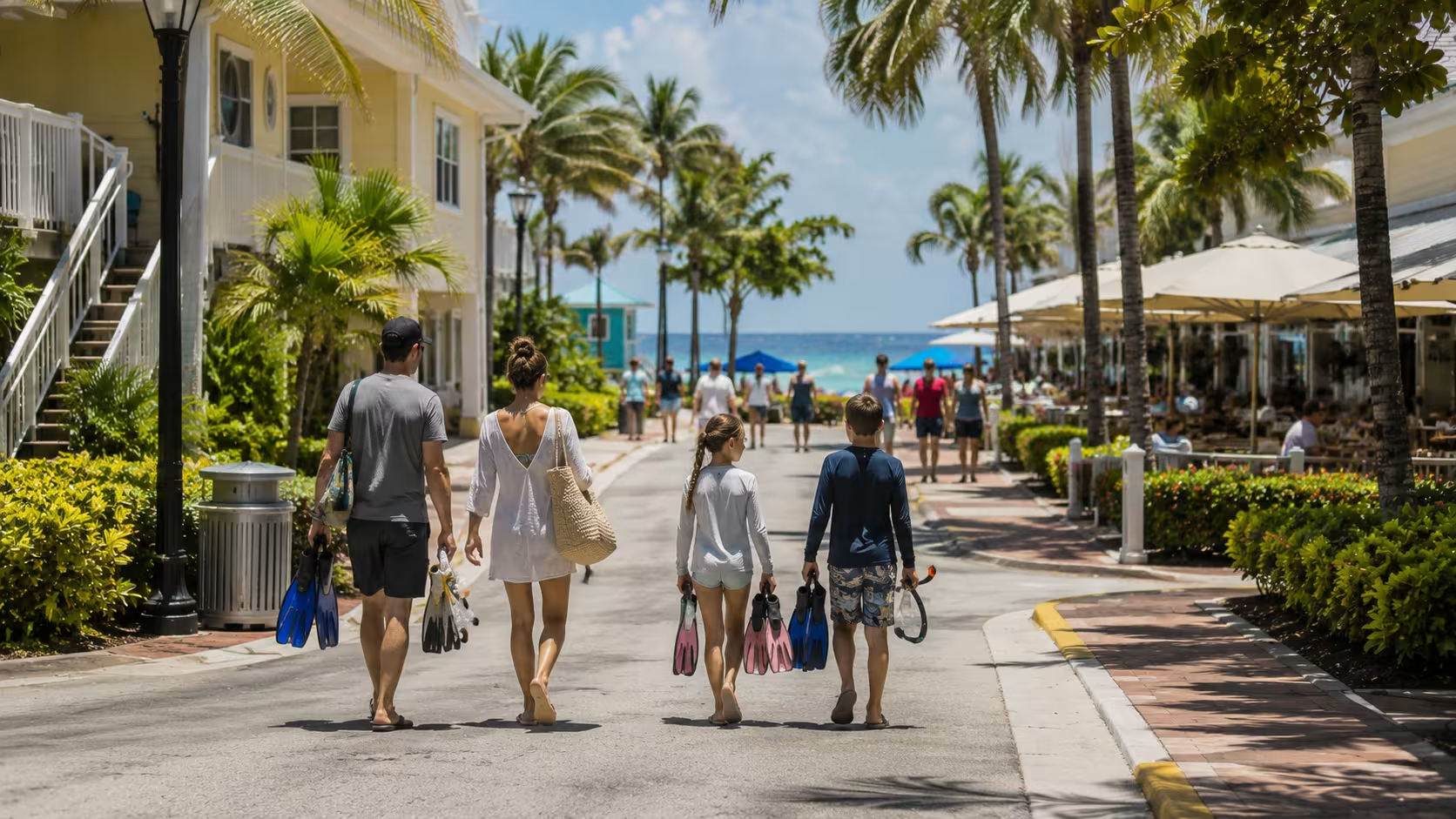
Stay in the village: Castle by the Sea
The easiest way to snorkel here is to stay within walking distance of the beach entries. Castle by the Sea is a 16-room beachside motel in the heart of the village, a minute's walk from the sand — which means you can be in the water before the morning crowds arrive, and before the metered lots fill up.
- Walk to the reef — steps from the El Mar Drive entries, the wreck trail, and the village rinse stations, ideal for early-morning sessions when visibility is best
- Skip the parking hassle — leave the meters and the PayByPhone app to the day-trippers
- Built for families — rooms with refrigerators and microwaves, select rooms with full kitchens, plus a heated pool and barbecue grills
- Dinner around the corner — Commercial Boulevard's seafood spots and tiki bars are a short walk away
Check rates and book your stay at Castle by the Sea.
Staying in downtown Fort Lauderdale instead? The drive up takes about 15 minutes, and plenty of visitors make it an easy half-day trip. But for the walk-in-from-the-sand version, waking up in the village is hard to beat.
After you snorkel
Rinse off at one of the stations and head into the village centre around Commercial Boulevard — casual restaurants, seafood spots, and tiki bars, most with an ocean view. Anglin's Fishing Pier is a short walk if you want to see the water from above, and the village has a small collection of shops and galleries for a relaxed afternoon.
Quick-start checklist
- Check conditions — calm seas, incoming tide, light wind, ideally a summer morning
- Pick your entry — Datura Avenue (closest to the wreck trail) or Hibiscus Avenue (quieter)
- Sort your gear — mask, snorkel, fins, and a dive flag
- Book a guide if it's your first time — about $79 for 90 minutes with gear included
- Apply reef-safe sunscreen before you head out
- Swim out — 5 minutes to the wreck trail, about 100 yards to the first reef
- Snorkel 1–2 hours, then rinse off and get lunch in the village
More ways to get on the water: The same village is a base for plenty more — paddleboarding and kayaking through the canals and mangroves, jet ski and parasailing along the coast, and deep sea fishing out where the Gulf Stream runs.
Wake up steps from the reef
The best snorkeling here happens early, on a calm morning with an incoming tide — before the day-trippers arrive and the meters fill up. Staying in the village means rolling out of bed, grabbing your mask, and being in the water in ten minutes.
Frequently asked questions
Yes — it's one of the most beginner-friendly shore-snorkeling spots in South Florida. The wreck trail sits at just 8 to 10 feet deep and is a 5-minute swim from the sand. Calm summer conditions, warm water, and the option of a guided tour make it ideal for first-timers and families with young children.
No, and that's the main reason people come here. The reef starts just 100 to 400 feet from the sand — you walk in from the beach and swim out. No boat, no charter, no seasickness. Deeper sites like the SS Copenhagen wreck do require a boat, but those are scuba dives rather than snorkeling.
Common sightings include sea turtles, nurse sharks (docile and not aggressive toward people), parrotfish, snappers, grunts, sergeant majors, stingrays, and moray eels. Less common but possible: eagle rays, octopus, and manatees in late winter and early spring. The reef itself features star, brain, and finger coral, plus purple sea fans.
April through September offers the clearest conditions. Summer brings the warmest water at 82 to 86°F, calmest seas, lightest currents, and visibility of 50 to 70 feet on calm mornings. Snorkeling works year-round, but winter can bring stronger currents and reduced visibility after storms. Early morning on an incoming tide is always clearest.
Beach access is free. With your own gear, your only cost is metered parking at $2 to $5. Gear rental runs $15 to $35 per person, and a dive flag is about $5 to $10. Guided tours start around $79 per person for 90 minutes with all gear included.
Either works. If you bring your own mask, snorkel, and fins, you still need a dive flag, which Florida law requires. Several local shops rent everything, and guided tours include gear in the price.
Yes. The wreck trail at 8 to 10 feet deep is well suited to kids. Calm summer water and the short swim from shore make it manageable, and guided tours accommodate families and nervous swimmers. Snorkel vests add buoyancy and confidence. Always supervise children and snorkel with a buddy.
About 15 minutes north by car. It's an easy half-day trip from anywhere in Broward County. Many visitors drive up for a morning of snorkeling and head back for the afternoon — though staying in the village puts you within walking distance of the reef.
A dedicated snorkel trail just off Datura Avenue, dedicated in 2002 by Jean-Michel Cousteau. It features replica 19th-century artifacts including concrete cannons, a large anchor, and ballast stones, sitting at 8 to 10 feet deep within a compact area of roughly 100 by 20 feet — ideal for beginners and families.
No. Coral is a living organism and even a light touch can damage years of growth. Fire coral can also sting painfully. Keep your distance, don't stand on the reef, and use mineral-based reef-safe sunscreen to avoid harming the ecosystem.
Yes. The same reef system is one of the best shore diving spots in Florida — the town is known as Florida's Beach Diving Capital. Certified divers can also reach the SS Copenhagen wreck by boat, and the second reef line at 30 to 50 feet. See our scuba diving guide for dive sites, gear, and costs.
Both are excellent but very different. Here the reef starts 100 to 400 feet from the sand with no boat needed, while Key Largo's reefs are about 5 miles offshore and require a charter. Lauderdale-by-the-Sea is also 15 minutes from downtown Fort Lauderdale versus a 1.5 to 2 hour drive to Key Largo. For beginners, families, and budget-conscious travellers, it's usually the more practical choice.