

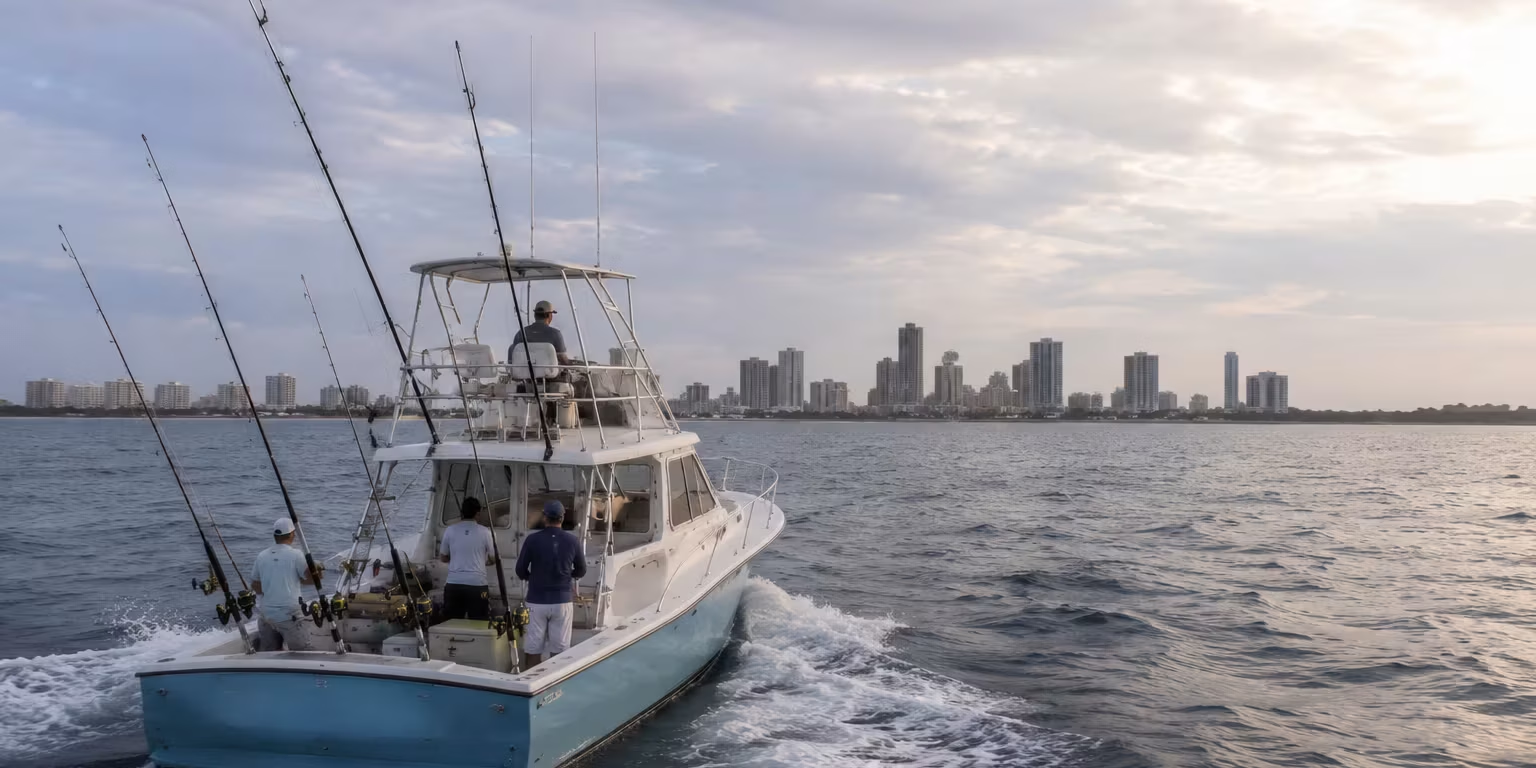
Dreaming of reeling in a sailfish under the South Florida sun? You're not alone. Deep sea fishing in Fort Lauderdale is one of the most thrilling ocean adventures on the East Coast — and 2026 is shaping up to be a great year to head offshore.
Whether you're a beginner wondering what to expect on your first charter or a seasoned angler chasing your next trophy, this guide covers everything: the best fish and seasons, how to choose a charter, what a trip costs, exactly what to pack, and where to stay so you're minutes from the dock.
Why Fort Lauderdale is the offshore fishing capital
There's a reason Fort Lauderdale consistently ranks among the best deep sea fishing destinations in the United States. It isn't marketing hype — the geography here is genuinely unusual, and once you understand it, you'll see why more than 260 charter operators and 100-plus marinas call this stretch of coast home.
The city sits on Florida's Gold Coast, with more than 300 miles of inland waterways across the metro region and some 24 miles of Broward County beaches. It's often called the "Venice of America" for its canal system feeding the Intracoastal Waterway — but the real magic happens well beyond the shoreline.
The Gulf Stream runs just 10 miles from shore. That warm, powerful current acts like a superhighway for big game fish, carrying sailfish, mahi mahi, wahoo, and tuna right past the city. In most coastal areas you'd travel 30, 50, even 80 miles offshore to find these fish. Here, your captain can have you in prime water in under 30 minutes.
It gets better. The ocean floor drops to 800 feet just 6 miles from shore — one of the fastest depth changes on the East Coast. Your trip doesn't need a long run to reach productive depth. More fishing, less commuting, which matters enormously on a half-day charter.
Add more than 100 reefs and wrecks within easy reach, plus Port Everglades for quick ocean access — the shallow reef starts about a mile from the inlet — and you have a fishery that's hard to match anywhere in the country.
Then there's the weather. South Florida's subtropical climate makes fishing productive every month of the year. No off-season, no long winter wait for the bite to return. Whether you come in January or July, there's something worth targeting.
Fort Lauderdale vs. Miami for deep sea fishing
This is one of the most common questions from visitors planning a South Florida fishing trip. Both cities offer excellent fishing, but there are real differences.
- Distance to the Gulf Stream — Both cities sit close to the current, which runs within roughly 10 miles of Fort Lauderdale's coast. Combined with Port Everglades' fast inlet access, that means less running and more time with a line in the water.
- Depth drop-off — The bottom falls to 800 feet just 6 miles out, giving captains quick access to deep-water species like swordfish.
- Charter selection — With over 260 charter operators and 100-plus marinas, Fort Lauderdale has one of the highest concentrations of fishing charters in the country. More competition means better service and more choice.
- Inlet access — Port Everglades gets you to open water fast. Some Miami departures involve a longer channel run first.
- Crowds — Miami is the bigger city with heavier tourist traffic. Fort Lauderdale marinas tend to be easier to reach and less chaotic in peak season.
- Pricing — Fort Lauderdale charters are often competitively priced against Miami. The density of operators keeps rates fair.
None of this means Miami is a poor choice — Biscayne Bay, the proximity to the Keys, and a diverse fishery all make it worthwhile. But for pure offshore efficiency, Fort Lauderdale comes out ahead. Less running, more fishing.
Top fish species and best seasons
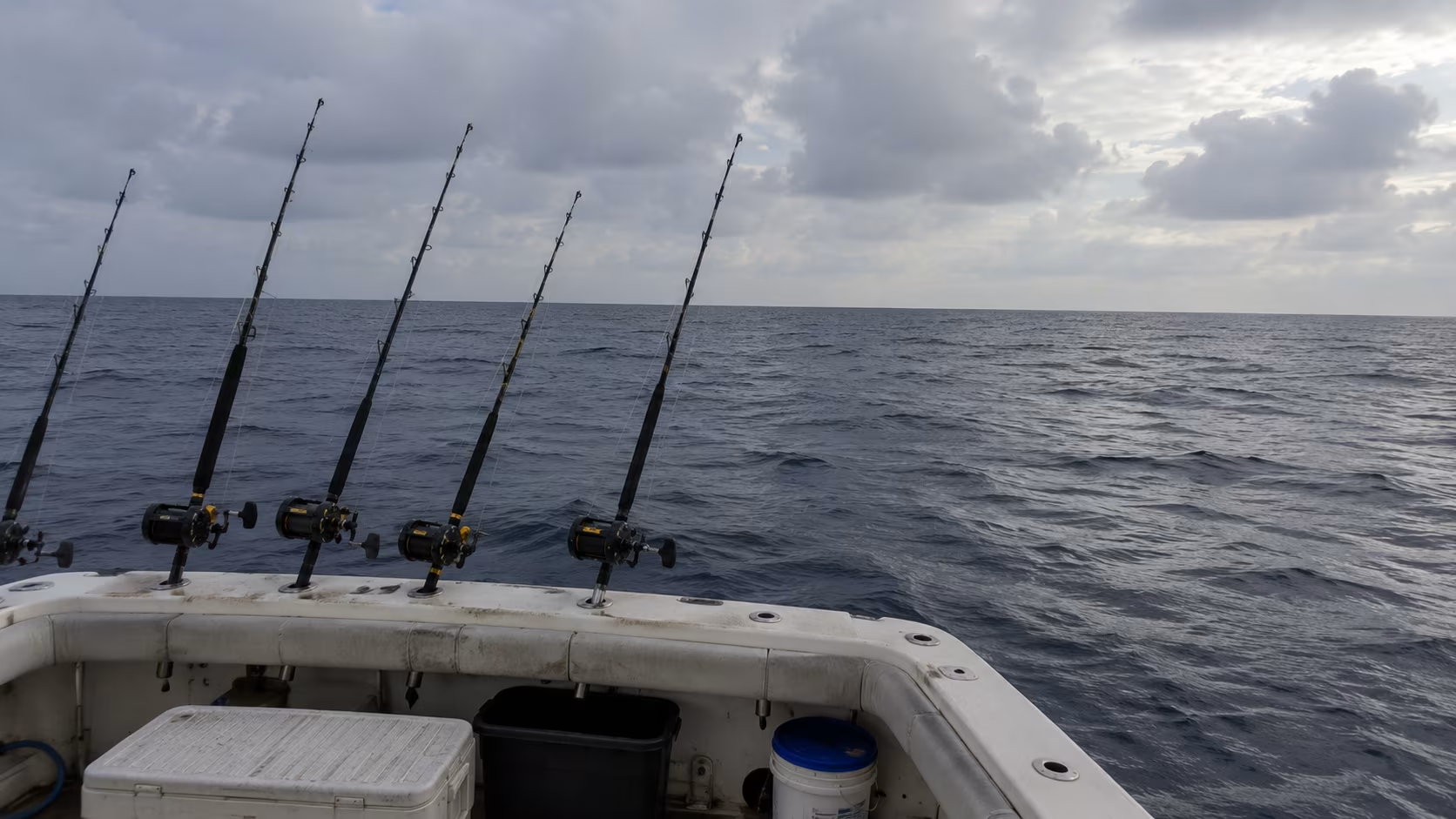
The most common question before booking a charter is simple: what am I going to catch? This is where Fort Lauderdale shows off. The diversity is remarkable — from acrobatic billfish to reef fish that make an outstanding dinner.
Pelagic and big game fish
These are the showstoppers, the fish that make your heart pound and your arms ache.
- Sailfish — South Florida's signature billfish. A massive sail unfurling, acrobatic jumps, a fight that tests everything you have. Sailfish are released, but the experience is the point. Peak season runs December through March, with December often the single best month, plus a strong second run September through November.
- Mahi mahi — A fish that looks like a work of art, fights hard, and tastes superb. Vibrant yellow-green colours and wonderfully beginner-friendly. Peak May through August, available year-round.
- Wahoo — Among the fastest fish in the ocean; they'll have your reel screaming in seconds. Elusive and highly prized. Peak January through March, and here's a tip from experienced captains: plan around the full moon.
- Blue and white marlin — The premier big game target, peaking June through August. Released after the fight.
- Swordfish — Caught by deep dropping in 1,500 to 2,000 feet of water during the day. Peaks late summer through fall, with some winter opportunity.
- Blackfin tuna — Brute fighters up to about 40 pounds, and excellent eating. Year-round with peaks in early spring and October through November.
- Yellowfin tuna — Less common here, but your best chance is December through January.
- King mackerel — Strong, fast fighters, especially productive during the fall and winter runs.
Reef and bottom fish
Not every good day requires miles of open ocean. The reefs and wrecks hold plenty of fish that are perfect for shorter trips and first-timers.
- Snapper — An entire family to choose from: yellowtail, mutton, mangrove, vermilion, red, and cubera. All excellent eating. Yellowtail and cubera are open year-round; red snapper has a very short season, usually in summer.
- Grouper — Red, black, and gag varieties hold around structure. Goliath grouper is catch-and-release only. Most shallow-water grouper are closed January 1 through April 30 and reopen May 1, and additional in-season closures can happen — check current FWC rules before you book.
- Amberjack — Consistent fighters on deep wrecks and reefs, present year-round, with harvest closed during the April spawning closure in Atlantic waters.
- Cobia — Often spotted following rays or whale sharks. Always a welcome surprise.
- Barracuda and triggerfish — Common around reefs and wrecks, and reliably entertaining.
Sharks
Hammerhead, bull, and tiger sharks turn up in deeper water. These fights are handled with care and release, and they suit experienced anglers looking for an extreme challenge. Going toe to toe with a shark is something you don't forget.
Season-by-season fishing calendar
So when is the best time to go deep sea fishing in Fort Lauderdale? Honestly, there's no bad month. But there are clear peaks for specific fish.
| Season | Best fish | Notes |
|---|---|---|
| Winter (Dec–Feb) | Sailfish, wahoo, blackfin tuna, kingfish, swordfish | Peak sailfish season and tournament period. Mild weather makes it a perfect escape from northern cold. |
| Spring (Mar–May) | Sailfish (through April), mahi mahi (especially May), blackfin tuna, wahoo, snapper, kingfish | One of the most productive seasons overall. Pleasant weather, calmer seas. Grouper reopens May 1. |
| Summer (Jun–Aug) | Mahi mahi (peak), blue and white marlin, yellowfin tuna, snapper | Peak tourist season and the strongest window for marlin. Red snapper season typically opens. |
| Fall (Sep–Nov) | Wahoo, sailfish (returning), blackfin tuna, kingfish, mahi mahi, blue marlin | Diverse transition season. Underrated because of hurricane season, but often excellent. |
Pro tip: Fall is the hidden gem for Fort Lauderdale fishing. Yes, it's technically hurricane season, but many captains say the bite during this window is among the year's best. Fewer crowds, diverse catches, and competitive charter rates — a smart move if your dates are flexible.
Choosing your trip: duration and charter type
This is the most important decision you'll make. Trip length determines what you can target, how far offshore you'll run, and what you'll pay.
Half-day vs. full-day fishing charters
| Trip | Duration | Best for |
|---|---|---|
| Half-day | 4–5 hours | Beginners, families with kids, reef and bottom fishing, tighter budgets |
| Three-quarter day | 6–7 hours | More range offshore, better odds at pelagics like wahoo and sailfish |
| Full day | 8–10 hours | Serious anglers after billfish, multiple species, or swordfish |
A half-day charter is a great fit if you're new to offshore fishing, travelling with young children, or want a taste of it without giving up the whole day. In four hours out of Port Everglades, your captain can reach productive reef and wreck sites quickly — remember, the shallow reef is about a mile from the inlet. You'll target snapper, grouper, and amberjack, with a real chance at pelagics depending on conditions.
A three-quarter day gives you meaningfully more range. Your captain can push toward the Gulf Stream, and the extra hours sharply increase your odds on sailfish, wahoo, or mahi mahi. For balancing value and results, it's often the smartest booking.
A full-day charter is the standard for dedicated anglers. Eight to ten hours gives your captain room to try several techniques and chase different species. If you're after billfish, or deep dropping for swordfish, this is the trip.
Our recommendation: If it's your first offshore trip, start with a half-day and see how you handle the seas. If you've fished before and want the best shot at something special, book the full day.
Private fishing charters
A private charter gives you exclusive use of the boat with your own captain and mate. It's the premium option — fully customisable, no strangers, total focus on what you want to catch. Rods, bait, tackle, and licences are included.
Fort Lauderdale private charters range from centre consoles for small groups to sportfishing yachts with air conditioning, galleys, and fighting chairs. Your captain tailors the trip to your goals, whether that's trolling for mahi mahi or deep dropping for swordfish.
Party boats and shared charters
If budget is the priority, party boats (also called drift or head boats) are an excellent option. These run 50 feet and up, carrying 20 to 60-plus passengers. You book individual spots rather than the whole boat, which makes it the most affordable way to fish offshore here.
Most party boats offer 4-hour and 6-hour trips with restrooms, enclosed lounges, and snack bars. Rods are provided or available to rent. The atmosphere is social and genuinely fun — you'll swap stories with strangers and probably leave with a few fish.
Shared small-group charters
Some captains offer a middle ground: shared trips on smaller boats where a few anglers split the cost. You get an intimate offshore experience — targeting marlin, sailfish, or swordfish — at a fraction of the private price. A smart option for solo travellers and couples.
Fishing techniques and top spots
You don't need to be an expert to have a great day. Your captain and mate handle the technical work — rigging, baiting, positioning, and coaching you through every step. Still, it helps to know what they're doing.
Trolling
The most common offshore technique and the one you'll see on most Fort Lauderdale charters. The boat moves at a steady speed, dragging baits or lures at varying distances and depths. It's highly effective on mahi mahi, wahoo, marlin, and tuna. Beginners love it: the crew sets the rods, you watch for the strike, and when the reel screams you grab the rod and hold on.
Kite fishing
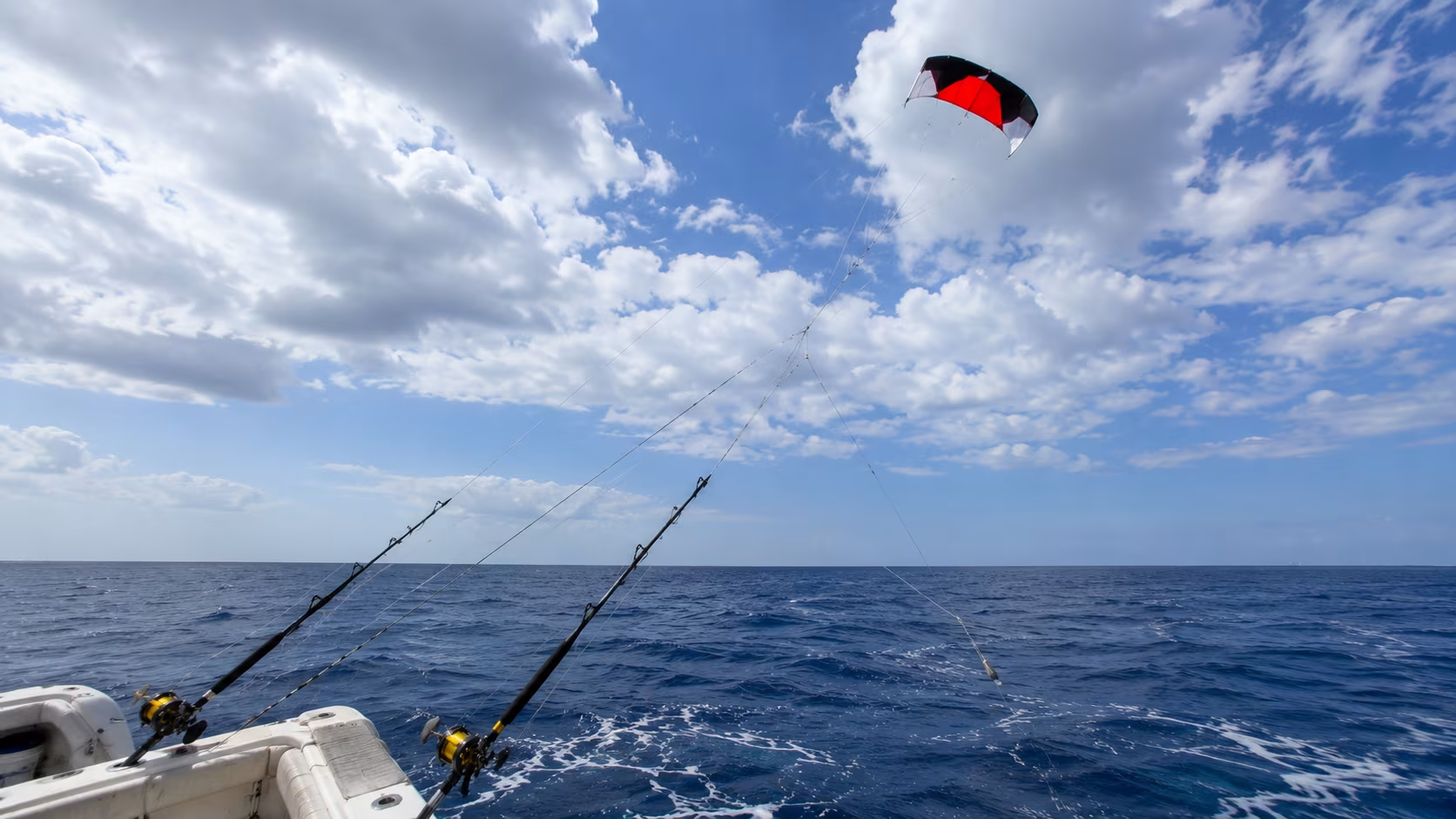
This technique was refined in South Florida and it's a sight to see. A kite is flown from the boat, suspending live bait right at the surface. The bait's commotion is irresistible to predators, especially billfish. You can run up to three rods per kite — and the best part is that you often see the fish coming before it strikes.
Kites also let your captain present baits well away from the boat and its engine noise, which matters for spooky billfish.
Bottom fishing
Simple, effective, and beginner-friendly. A weighted rig is lowered to the bottom to target grouper, snapper, and amberjack around structure. Drop the line, wait for the bite, reel up your fish. It's a more relaxed style, ideal for families.
Deep dropping is the extreme version, using specialised gear in 1,500 to 2,000 feet to target swordfish. Electric reels handle the retrieval, which is a mercy — swordfish are serious fighters.
Top fishing spots near Fort Lauderdale
Your captain picks the spot based on the day's conditions, but a few areas produce year after year.
Port Everglades inlet
The main gateway to open ocean for most Fort Lauderdale charters. The shallow reef starts about 1 mile out and holds several snapper species. Push further and you'll find marlin, tuna, and barracuda. Fast ocean access means more fishing and less running.
Pompano Beach
Close to the Gulf Stream and a hotspot for sailfish, mahi mahi, and kingfish. It's also home to the Sailfish Challenge tournament. Charters departing here often put you right in the strike zone — and it's about 10 minutes north of Lauderdale-by-the-Sea.
Hillsboro Inlet
Known for record catches, Hillsboro is a premier departure point for trophy sailfish, wahoo, and snapper. The combination of depth, current, and structure makes it one of the most productive spots in South Florida — and one of the closest to Lauderdale-by-the-Sea.
The reef and wreck complex
Over 100 reefs and wrecks at varying depths. The shallow reef lines begin about a mile out; deeper wrecks and the dramatic drop-off wait around 6 miles. These structures hold snapper, grouper, amberjack, sharks, and much more — excellent for shorter trips and near-constant action.
What a fishing charter costs and what to bring
Pricing varies by charter type, trip length, boat size, and season. Here's a realistic range to budget against.
| Charter type | Duration | Typical price |
|---|---|---|
| Party boat | 4 hours | $50–$75 per person |
| Party boat | 6 hours | $75–$120 per person |
| Private (small boat) | Half-day (4–5 hrs) | $600–$1,000 total |
| Private (small boat) | Full day (8–10 hrs) | $1,200–$2,200 total |
| Private (sportfisher) | Half-day (4–5 hrs) | $1,000–$1,800 total |
| Private (sportfisher) | Full day (8–10 hrs) | $2,000–$3,500+ total |
These prices normally include tackle, bait, and licences. On private charters everything is covered — you just show up. On party boats, rod rental may cost a few dollars extra.
Don't forget the tip. It's customary to tip your captain and mate 15–20% of the charter price. These are people who get up before dawn, maintain the boat, rig every bait, and work hard to put you on fish. ATMs are available near most marinas if you need cash.
When comparing quotes, remember the cheapest charter isn't always the best value. An experienced captain who knows where the fish are and keeps good equipment makes a dramatic difference. Read reviews, ask questions, and book with confidence.
What to pack
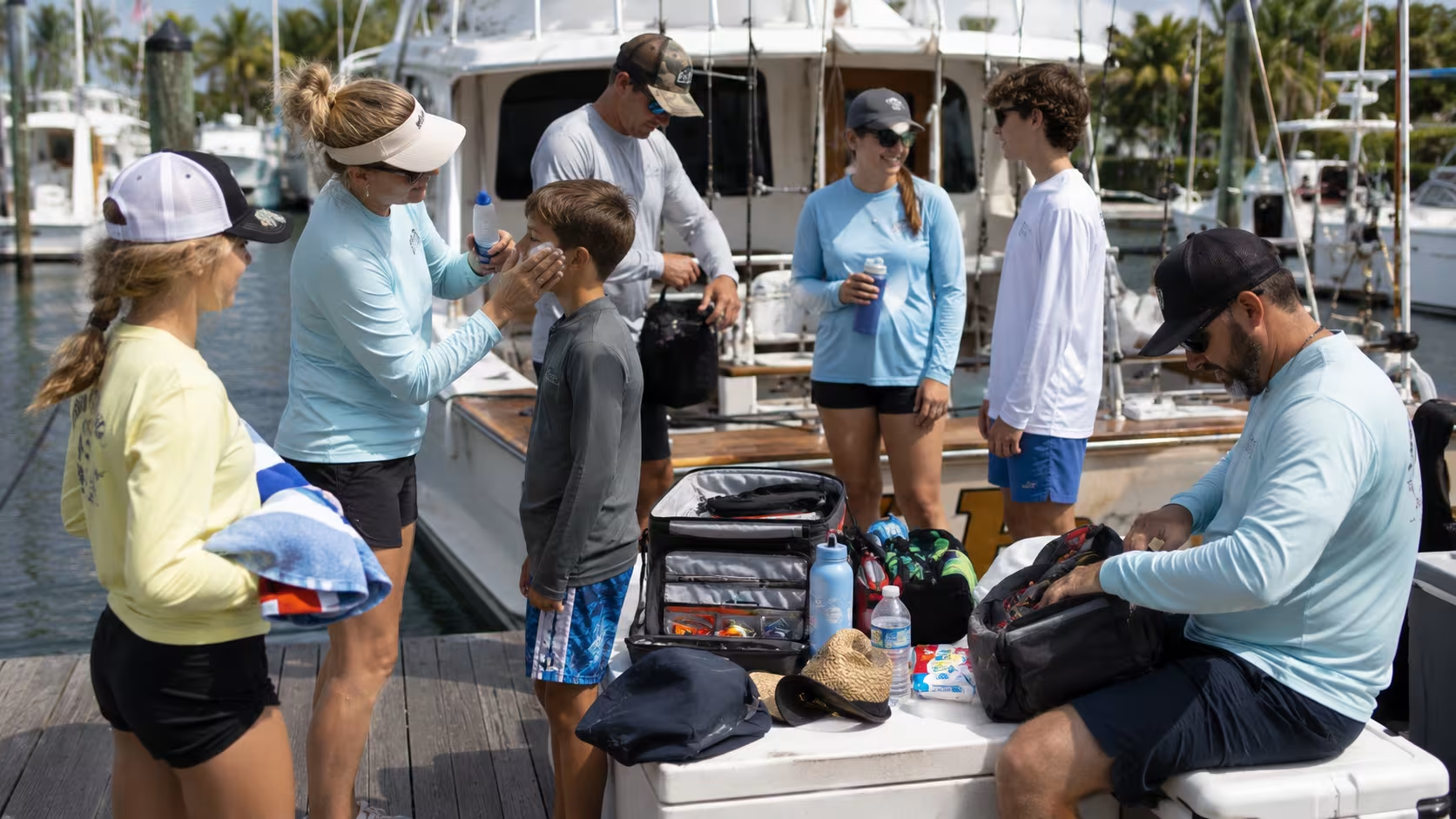
- Sun protection — Reef-safe sunscreen (SPF 30+), applied before boarding and reapplied every two hours. The sun offshore is brutal. Add a wide-brim hat, polarised sunglasses on a retainer strap, and a UPF long-sleeve shirt.
- Proper footwear — Closed-toe shoes with soft, non-marking soles, or sturdy sandals with a heel strap. No flip-flops: wet decks and loose footwear are a bad combination.
- Water and snacks — At least 2 litres per person for a half-day, a gallon for a full day, more in summer. Keep food light: sandwiches, fruit, granola bars, jerky. Skip heavy or greasy meals.
- Motion sickness medication — A meclizine tablet (Bonine or Dramamine Less Drowsy) about an hour before departure. Ask your pharmacist what's right for you.
- Photo ID — Most charters ask each adult to carry one. A passport is only needed if your trip crosses into Bahamian waters.
- Cash for the tip — 15–20% of the charter price.
What you don't need
Fort Lauderdale charters provide all rods, reels, tackle, bait, and licences. You don't need to bring gear unless you specifically want your own.
Nice to have
- Waterproof phone case or dry bag
- Small soft cooler for taking your fillets home
- GoPro or chest-mounted camera — you'll want footage of that sailfish
- Light rain jacket
- Dry change of clothes and a small towel
Beginners, families, and groups
Tips for first-time anglers
First time offshore? You don't need any fishing background to have a great day. Your captain and mate do this every day and will walk you through everything, from holding the rod to landing the fish.
- Book an experienced local captain. This is the single biggest factor. A good captain knows the seasonal patterns and the productive spots. Read reviews rather than defaulting to the cheapest quote.
- Book early, especially in peak season. The best charters fill up fast.
- Start with a half-day. Four to five hours is the ideal introduction without the physical demands of a full day.
- Be patient. Fishing means waiting between bites. Enjoy the ride and let the anticipation build.
- Listen to the crew. They'll tell you when to reel and when to let line out. Following their instructions dramatically improves your odds.
- Visit a local tackle shop. They know what's biting and which charters are producing.
- Release what you won't eat. Conservation keeps this fishery healthy for the next generation.
Beginner-friendly: On a first trip, ask your captain about mahi mahi or reef fish like snapper and grouper. They forgive beginner mistakes, fight hard enough to be exciting, and taste excellent.
How to avoid seasickness
Seasickness is the number one worry people have, and it's a fair one. The good news: with the right preparation, most people are fine.
- Take medication before boarding — a meclizine tablet at least an hour before departure. Once you feel nauseous, medication works far less well.
- Eat a light meal first — an empty stomach makes it worse. Toast, crackers, a banana.
- Stay hydrated — dehydration amplifies symptoms.
- Watch the horizon if you start feeling off. It helps your brain reconcile what your inner ear is sensing.
- Stay on deck, not in the cabin. Fresh air and a visual reference help enormously.
- Ginger and Sea-Bands help mild cases. Plenty of anglers swear by them.
- Go easy on alcohol. Sun, dehydration, swells, and beer is a rough combination.
One reassuring detail: because the fishing grounds are so close to shore here, the run through open water is short compared with most destinations. Your captain can also adjust the route if it gets rough.
Fishing with kids
Offshore fishing is a fantastic family activity, and many Fort Lauderdale charters cater to families. The look on a kid's face when they land their first fish is worth the whole trip.
- Half-day trips are ideal — four to five hours keeps kids engaged without stretching attention spans. Bottom fishing works best because the action is more constant.
- Private charters offer flexibility — the crew can pace the day around your family. Snack break? No problem.
- Party boats suit older kids — around 10 and up, kids do well with their own spot at the rail. It also keeps costs down for bigger families.
- Safety first — reputable charters carry Coast Guard-required equipment. Ask about child-sized life jackets when you book. In Florida, children under 6 must wear one on boats under 26 feet while underway.
- Prepare for seasickness — kids are often more susceptible. Check with your pediatrician about appropriate medication.
- Ask for kid-friendly fish — tell your captain you're fishing with children and they'll target snapper, small grouper, and mahi mahi.
Parent tip: Pack extra snacks, extra water, and extra sunscreen. Kids burn through all three faster than adults. And bring a waterproof camera.
Group and corporate charters
Bachelor party? Corporate team-building? Group fishing charters are a genuinely good way to bring people together — there's something about fighting fish side by side that no conference room replicates.
- Multiple private boats — for groups of 10 or more, many operators coordinate several boats leaving together. Turn it into a friendly competition.
- Party boats for big groups — with 20 to 50 people, booking a party boat is the simplest and most cost-effective route.
- Add-ons — catering, custom tournament formats, photography packages, and dockside celebrations are all available.
- Corporate packages — some operators handle everything including transport and accommodation coordination.
Book as far ahead as you can, and phone the operator directly rather than using a web form — coordinating multiple boats takes lead time.
Licences, regulations, and keeping your catch
Do you need a fishing licence?
If you're fishing from a licensed charter boat — and virtually all Fort Lauderdale operators are licensed — you don't need your own licence. The vessel's licence covers everyone on board, on both private charters and party boats.
If you're fishing independently from shore or your own boat, anglers aged 16 to 65 need a valid Florida licence, available online through the FWC.
Key regulations by species
Important: Seasons change frequently, sometimes more than once a year. The list below is a general guide — always confirm current rules with your captain or the FWC before targeting a specific species. Your captain tracks these changes so you don't have to.
- Sailfish and marlin — Catch and release in practice. Harvest is tightly restricted by federal HMS permit, large minimum sizes, and a one-fish limit, and nearly every charter releases them on principle.
- Tarpon — Release only, year-round in Florida.
- Grouper — Most shallow-water species are closed January 1 through April 30 in the South Atlantic, reopening May 1.
- Red snapper — A very short season, usually in summer. Exact dates are announced annually by the FWC.
- Snook — Closed during parts of summer and winter; dates shift each year.
- Yellowtail and cubera snapper — Open year-round.
Can you keep what you catch?
- Keepable fish — Mahi mahi, snapper, grouper (in season), tuna, wahoo, and kingfish, provided they meet minimum size and bag limits. The crew sorts this out on board.
- Release-only fish — Tarpon must be released. Sailfish and marlin are released by virtually every charter.
- Cleaning and filleting — Most charters fillet your catch at the dock. Some include it, some charge a small fee. Either way you leave with fresh fillets.
- Cook your catch — Several waterfront restaurants near the marinas will cook what you caught. Mahi mahi you landed three hours earlier doesn't get fresher.
- Taking it home — Bring a small soft cooler. If you're flying, your charter can pack everything on ice.
Tip: Ask your captain about handling your catch based on your travel plans. They've helped thousands of anglers work this out and can point you to a "cook your catch" restaurant nearby.
Tournaments, weather, and onboard rules
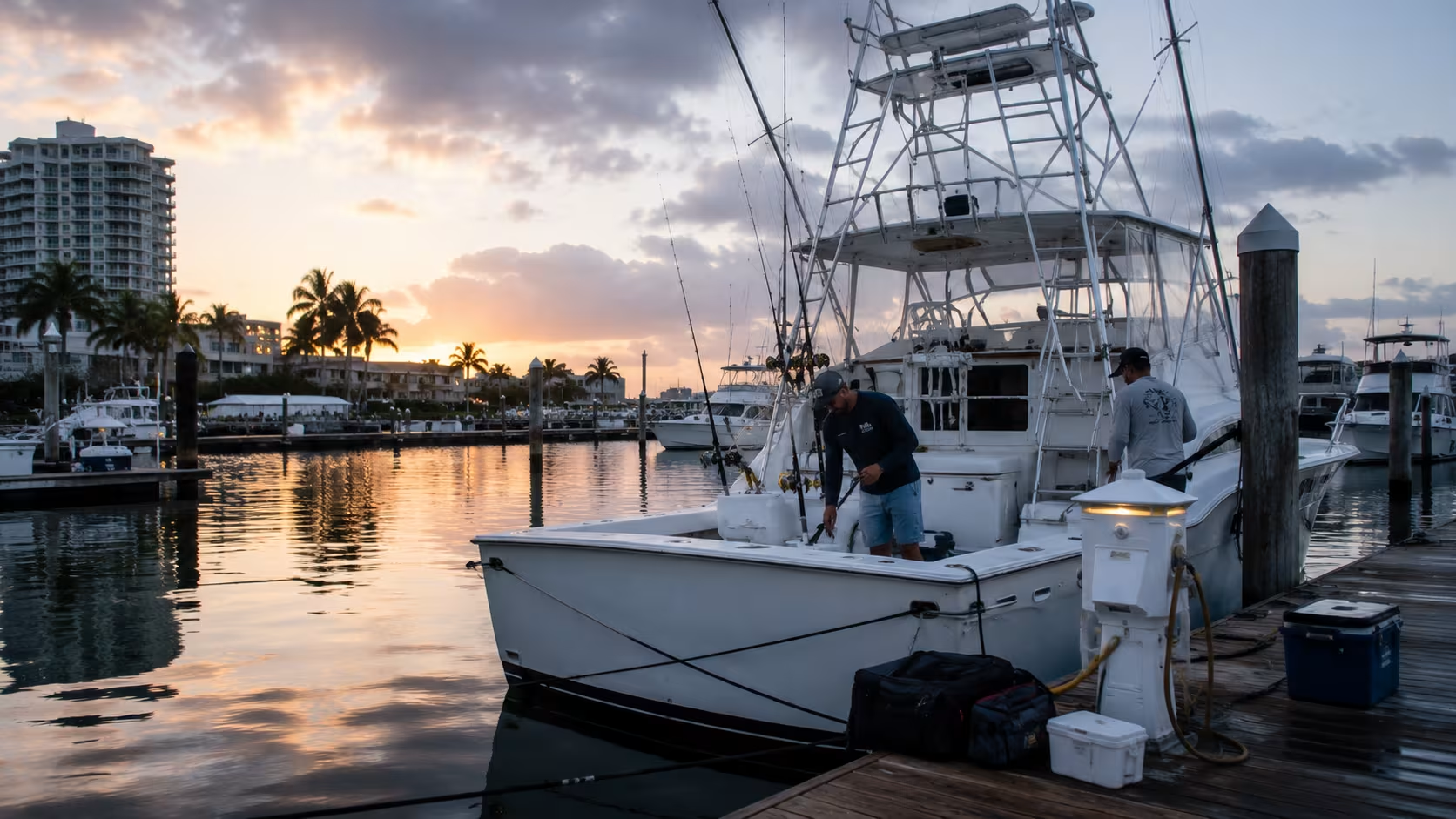
Fishing tournaments in the area
- Sailfish Challenge — Based near Pompano Beach and Hillsboro Inlet, this tournament draws top teams from around the world, with a purse that has topped $600,000. Worth watching even if you're not competing.
- Line, Vine, and Dine — A billfish tournament combining competitive fishing with wine tasting and charity fundraising.
- Winter tournament season — December through February is packed with events, drawing competitive anglers from around the globe.
Even as a spectator, a weigh-in is a great afternoon. You'll see remarkable fish and get a feel for the fishing culture that defines this coast.
Weather and cancellations
A little rain doesn't stop the fishing — in fact, the bite often improves under overcast skies, and summer showers pass quickly. Thunderstorms and small craft advisories are another matter: if conditions are genuinely unsafe, any reputable charter reschedules at no penalty. Check the forecast, but don't panic about a few clouds.
Alcohol on board
Beer, wine, and cocktails are generally welcome on Fort Lauderdale charters. But go easy — sun, dehydration, swells, and alcohol add up fast, and you'll be handling sharp hooks and heavy rods. Alternate every drink with water.
Where to stay: Lauderdale-by-the-Sea
Here's something most visitors don't realise until they arrive: two of the best departure points on this coast — Hillsboro Inlet and Pompano Beach — are within about 10 minutes of Lauderdale-by-the-Sea. If your charter leaves at 7 a.m., that's the difference between a relaxed coffee and a 40-minute drive in the dark.
Lauderdale-by-the-Sea is a small beach village just north of Fort Lauderdale, walkable end to end, with casual restaurants and a fishing pier right in the middle of town. It's the kind of place that still feels like old Florida.
Our pick: Castle by the Sea. A 16-room beachside motel in the heart of the village, a minute's walk from the sand. Rooms have refrigerators and microwaves — select rooms have full kitchens — so you can cook the mahi mahi you landed that morning. There's a heated outdoor pool, a tiki hut with barbecue grills, and free parking for the cooler full of fillets.
- 10 minutes to Hillsboro Inlet and Pompano Beach — early departures without the early alarm.
- About 20 minutes to Port Everglades for charters leaving from the main Fort Lauderdale marinas.
- Anglin's Fishing Pier is a short walk away — a good option on a day you're not heading offshore.
- Grills on site — cook your catch instead of paying a restaurant to do it.
Anglers: book your stay at Castle by the Sea.
If you'd rather be closer to Port Everglades, you'll find larger hotels along Fort Lauderdale Beach and in the downtown marina district. They put you nearer the big sportfishing fleet, but you trade the village atmosphere and pay more for it.
More ways to get on the water: Not heading offshore every day? The reef in front of Lauderdale-by-the-Sea starts about 100 yards from the sand — see our guides to snorkeling and scuba diving. For a slower pace, there's paddleboarding and kayaking through the canals, or jet ski and parasailing if you want speed instead.
Ready to book your Fort Lauderdale fishing trip?
The Gulf Stream is 10 miles out and the fish are biting year-round. Whether it's a half-day with the family, a full day chasing billfish, or a group charter with friends, the best captains fill up fast — especially in sailfish season. Book your charter, then book somewhere you can walk to the beach afterward.
Frequently asked questions
No, not if you're fishing from a licensed charter boat. The vessel's licence covers all passengers on board, on both private charters and party boats. You only need your own Florida licence if you're fishing independently from shore or your own boat, and you're between 16 and 65.
Party boat spots start around $50–$75 per person for a 4-hour trip. Private charters run $600–$1,000 for a half-day on a smaller boat, up to $2,000–$3,500 or more for a full day on a large sportfisher. Rods, reels, tackle, bait, and licences are typically included. Budget an extra 15–20% to tip the captain and mate.
Fishing is productive year-round thanks to the Gulf Stream. Winter (December through February) is peak sailfish season. Spring brings diverse action with mahi mahi arriving in force by May. Summer delivers peak mahi mahi and marlin. Fall is underrated, with wahoo, returning sailfish, and diverse catches. There's no bad month.
Sailfish, mahi mahi, wahoo, blue and white marlin, swordfish, blackfin and yellowfin tuna, king mackerel, several snapper species, grouper, amberjack, cobia, barracuda, and sharks. What you target depends on the season, the trip length, and the techniques your captain chooses.
A half-day (4–5 hours) suits beginners, families with kids, and tighter budgets, with plenty of action on the reefs and wrecks. A full day (8–10 hours) suits serious anglers after billfish or swordfish. The three-quarter day (6–7 hours) is the balance point, with more range and better odds on sailfish and wahoo.
Take a meclizine tablet (Bonine or Dramamine Less Drowsy) at least an hour before departure — your pharmacist can confirm what suits you. Eat a light meal first and skip anything heavy or greasy. Stay hydrated. On the water, watch the horizon if you feel queasy, stay on deck in fresh air, and go easy on alcohol. Ginger and Sea-Bands help mild cases.
Yes. Many Fort Lauderdale charters welcome children. Private charters offer the most flexibility for younger kids, while party boats work well from around age 10. Reputable operators carry Coast Guard-required equipment including child-sized life jackets — in Florida, children under 6 must wear one on boats under 26 feet while underway. A half-day focused on bottom fishing keeps kids engaged.
In most cases, yes. Mahi mahi, snapper, grouper (in season), tuna, wahoo, and kingfish can be kept if they meet minimum size and bag limits. Tarpon must be released, and sailfish and marlin are released by virtually every charter. Most operators fillet your catch at the dock, and several nearby restaurants will cook it for you.
Offshore fishing takes you miles out into open ocean for large pelagic species like sailfish, mahi mahi, marlin, and tuna. Inshore fishing stays in calmer, shallower water — bays, channels, and along the coast — targeting snook, redfish, and tarpon. Offshore means bigger fish and a bigger adventure; inshore is calmer and closer to land.
Both cities fish well and both sit close to the Gulf Stream. Fort Lauderdale's edge is logistical: Port Everglades offers some of the quickest ocean access anywhere, the bottom drops to 800 feet just 6 miles out, and the area has over 260 charter operators and 100-plus marinas — more options and more competitive pricing.
Reef-safe sunscreen (SPF 30+), a wide-brim hat, polarised sunglasses with a retainer strap, closed-toe non-marking shoes, plenty of water (about 2 litres per person for a half-day, more in summer), light snacks, motion sickness medication, photo ID, and cash to tip the crew 15–20%. You don't need gear — rods, reels, tackle, bait, and licences are all provided.
Lauderdale-by-the-Sea is about 10 minutes from Hillsboro Inlet and Pompano Beach, two of the best departure points on this coast, and roughly 20 minutes from Port Everglades. Castle by the Sea sits in the heart of the village, a minute from the beach, with barbecue grills on site and rooms with refrigerators — handy if you want to cook your catch rather than pay a restaurant to do it.