

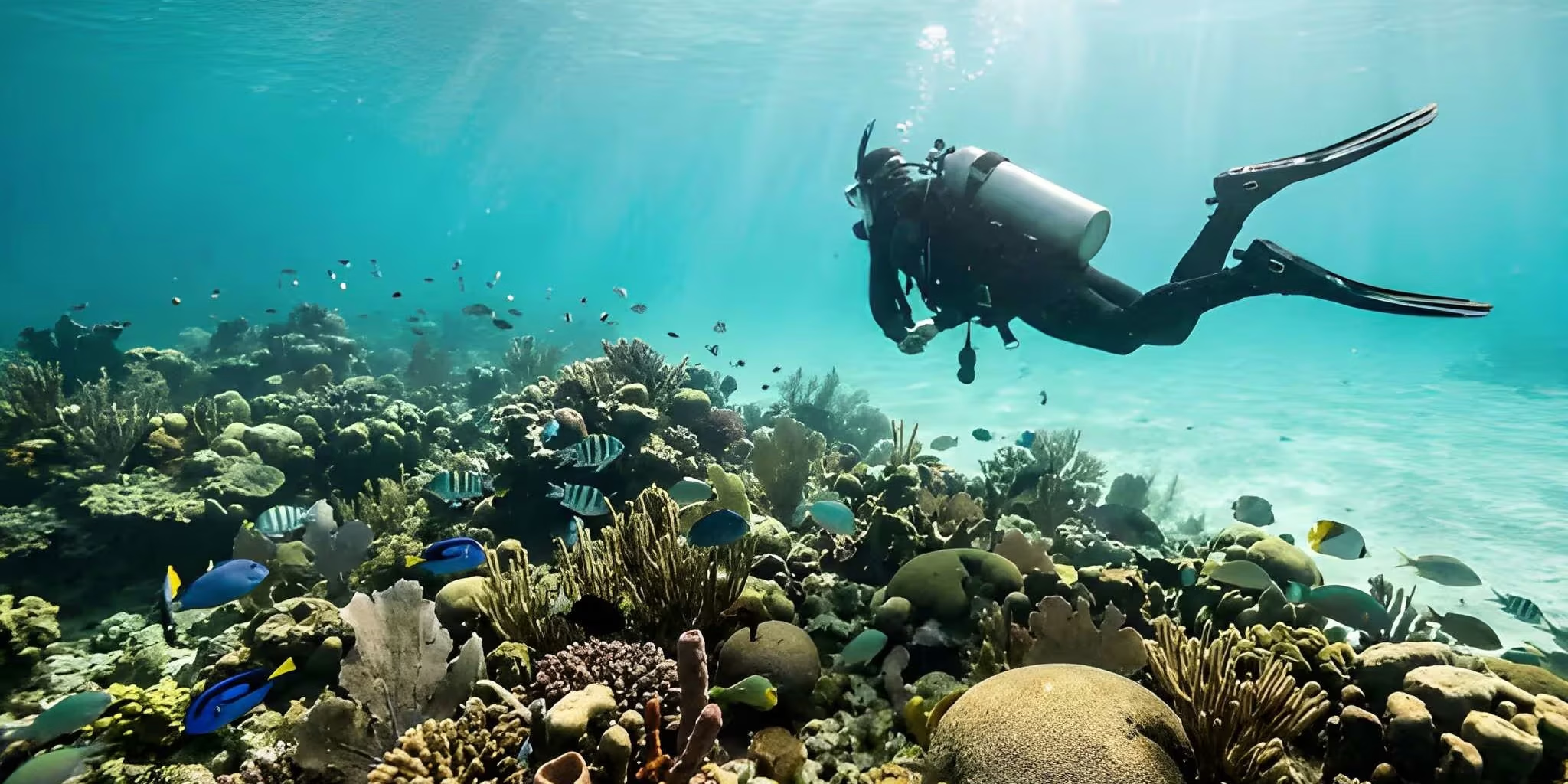
Picture this: instead of sitting in traffic or staring at a screen, you're floating above living coral reefs in warm, clear Florida water — and you got there by walking off the beach.
Welcome to Lauderdale-by-the-Sea, Florida's premier shore diving destination, where three coral reefs sit within reach of the sand and the first one starts about 100 yards out. No boat, no crowded dive deck, no waiting on a captain's schedule.
Why dive Lauderdale-by-the-Sea
Divers know the frustration: hauling gear across the country, then dealing with crowded boats and murky water. Lauderdale-by-the-Sea removes most of that. Known as Florida's Beach Diving Capital, it offers shore diving that holds up against boat dives almost anywhere in the country.
The geography does the work. The Gulf Stream keeps the water warm year-round and the visibility good, and three distinct reef lines sit close to shore — the first about 100 yards from the sand.
Worth knowing: The SS Copenhagen wreck alone draws thousands of divers a year, making it Florida's most-visited underwater archaeological preserve. It sits about three-quarters of a mile offshore and requires a boat.
The convenience is hard to overstate. Direct flights land at Fort Lauderdale from cities across the country, and the town is roughly 30 minutes from the airport — so you can genuinely dive the day you arrive.
Not certified? You don't need to be. The same reefs are excellent on a mask and snorkel — see our guide to snorkeling in Lauderdale-by-the-Sea for the shallow sites, gear, and guided tours.
Must-visit dive sites
Each site here offers something different, from shallow coral gardens to a historic shipwreck.
Datura Avenue Portal
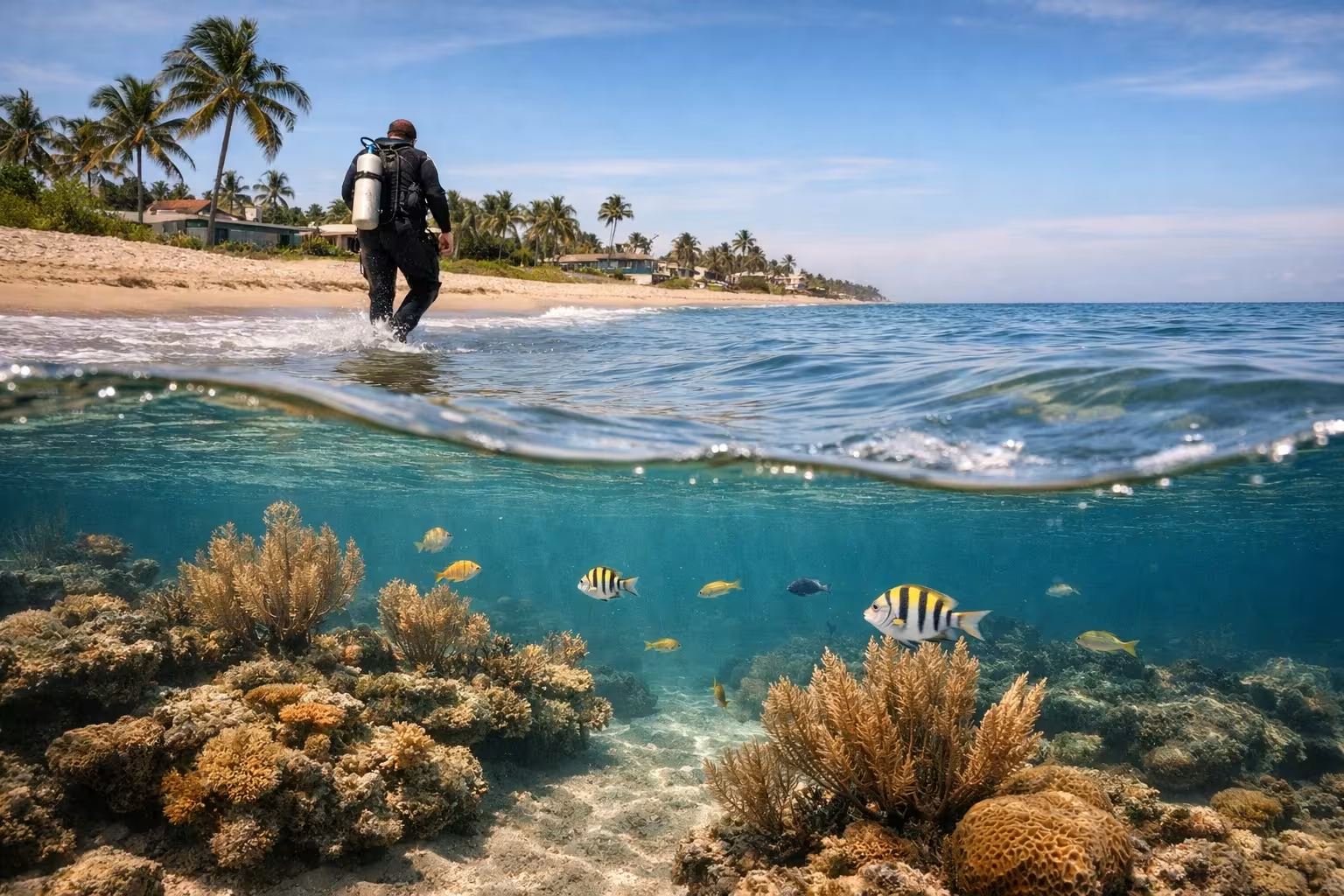
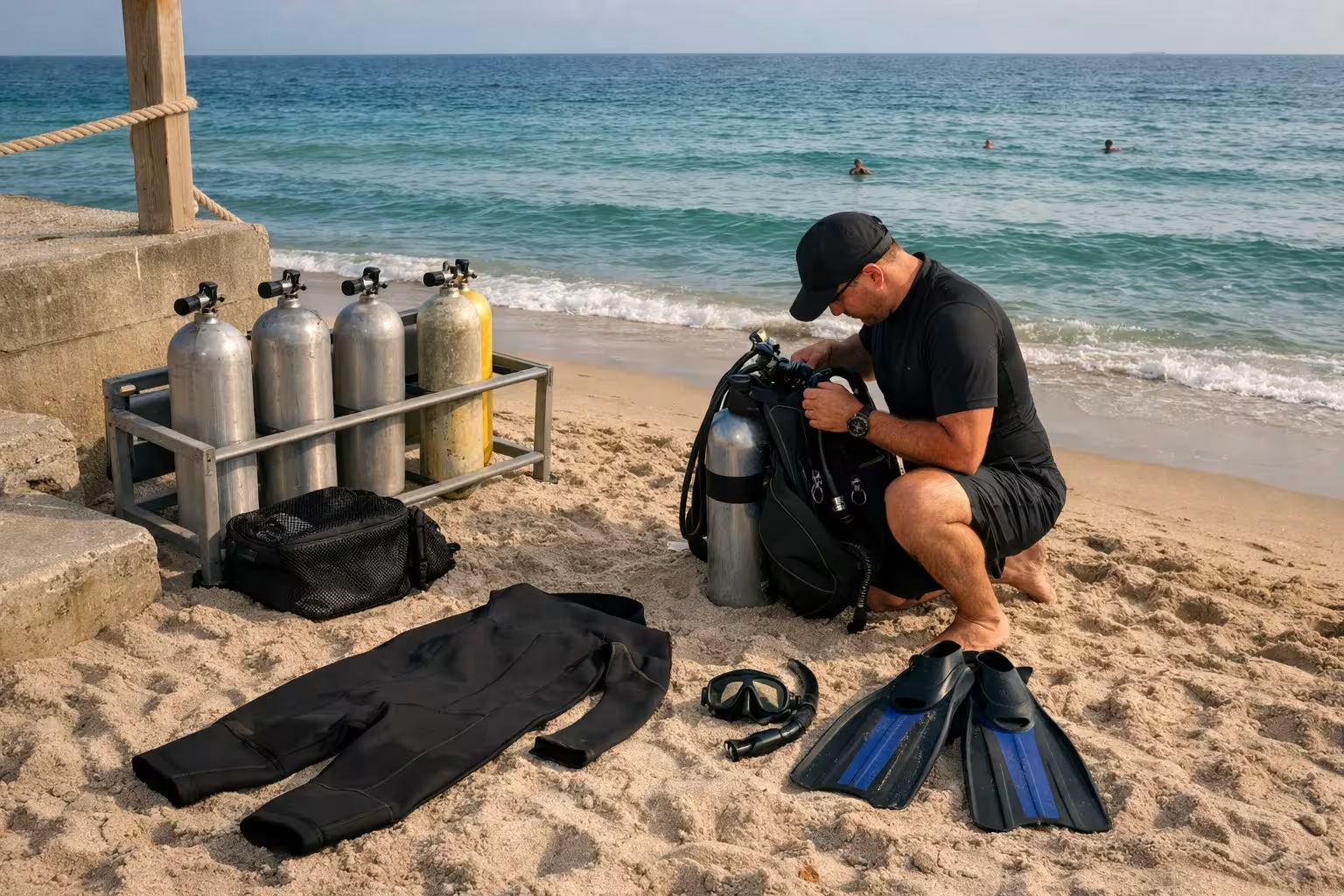
Your home base for shore diving. At the corner of Datura Avenue and El Mar Drive, this is the most popular entry point in Broward County, with tank racks on site for gear setup.
The depth range of 8 to 20 feet suits Open Water divers and freedivers alike. Swim roughly 100 yards east to reach the reef. The gradual depth progression makes it an easy first dive of the trip.
SS Copenhagen
A British steamship that ran aground in 1900, now resting in 16 to 31 feet of water about three-quarters of a mile offshore. It's been a Florida Underwater Archaeological Preserve since 1994 and on the National Register of Historic Places since 2001.
The wreckage spreads over 300 feet of ocean floor and functions as an artificial reef and nursery for juvenile fish. It's the site that put this town on the map for wreck divers.
Pro tip: The SS Copenhagen requires boat access. It pairs well with a shore dive on the same day, and Gold Coast Scuba runs boat trips out to it.
Shipwreck Snorkel Trail
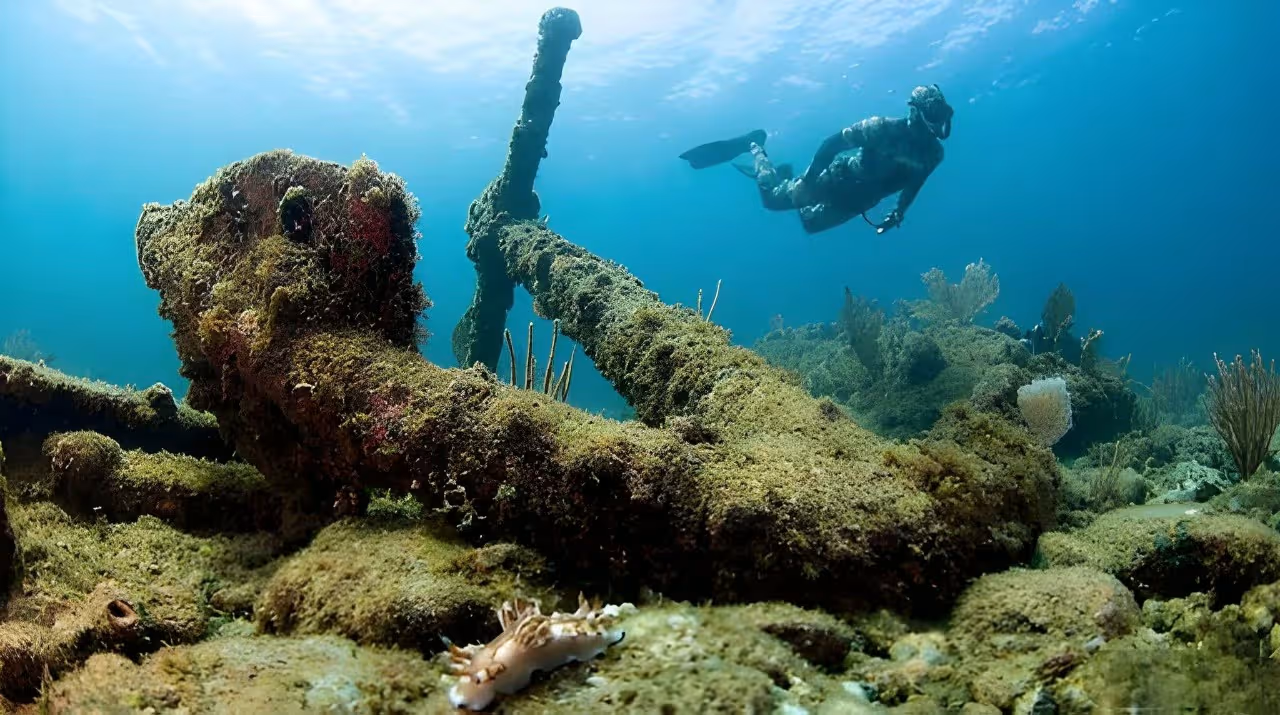
Dedicated in 2002 by Jean-Michel Cousteau, this artificial trail off the Datura Avenue Portal sits in about 10 feet of water. It recreates an 1800s maritime scene within a 100 by 20 foot area — five concrete cannons (two north, three south), an anchor, and a ballast pile.
For divers, it works best as a warm-up on your first day, or when you're with a mixed group where some people want to snorkel while others dive. If snorkelling is the main event for your group, our snorkeling guide covers it in more detail.
| Dive site | Depth | Access |
|---|---|---|
| Datura Avenue Portal | 8–20 feet | Shore dive |
| SS Copenhagen | 16–31 feet | Boat required |
| Shipwreck Snorkel Trail | 10 feet | Shore dive |
| Second reef line | 30–50 feet | Boat recommended |
Beach entry points and parking
Logistics are the main worry for visiting divers: where to park, where to get in, where to set up. The town has thought this through.
Where to enter the water
The Datura Avenue Portal is the best bet for most dives, with the most complete facilities including tank racks. Hibiscus Avenue, south of Commercial Boulevard, is a quieter alternative. El Prado Park, north of Commercial, has the most parking and room to spread out gear — useful on busy weekends.
Parking and payment
All parking in town is metered. Lauderdale-by-the-Sea uses the PayByPhone app, which lets you pay by licence plate and extend your time remotely — genuinely useful when a dive runs long. Pay stations are also available if you'd rather not use the app.
Budget for it: Metered parking adds up over a week of diving. El Prado Park usually has the most spaces during peak season. Staying in the village lets you skip the meters entirely.
Conditions and certification requirements
Water conditions
The Gulf Stream keeps the water warm year-round — a thin wetsuit works most of the year, and a swimsuit is often enough in summer. Visibility is generally excellent for shore entries, better than most beach diving on the East Coast.
Currents on the shallow reef stay minimal, which makes navigation easy and reduces air consumption. That's a real advantage for newer divers or anyone getting back into it after a break.
Certification
An Open Water Diver certification covers most sites here. Advanced certification opens up the deeper offshore sites and more demanding boat dives, but it isn't necessary for the shore diving this guide focuses on.
Dive operators require current certification, so make sure your card is valid before you travel. PADI and SSI are both universally recognised. Keep a digital copy on your phone as backup.
Continuing education: The calm, shallow conditions here make this a good place to take a course. Gold Coast Scuba is a PADI 5-Star facility offering instruction, so you can combine a dive trip with a certification upgrade.
Dive shops and equipment rental
Whether to fly with gear or rent locally is a real decision. Renting here is a solid option — you'll save on baggage fees and get well-maintained equipment.
Gold Coast Scuba
Gold Coast Scuba is the dive shop in Lauderdale-by-the-Sea, located on Commercial Boulevard within walking distance of the beach entries. It's a PADI 5-Star facility with multilingual instruction, and it handles rentals, guided dives, boat trips to the SS Copenhagen, air fills, and dive flags.
Force-E, in nearby Pompano Beach and Fort Lauderdale, is the other option if you need something Gold Coast doesn't stock.
Guided dives
If you don't know the local reefs, a guided dive is worth it. Guides know where the turtles hold and which sections of each reef are worth your bottom time. Options range from standard guided dives to underwater photography sessions and marine-biology-focused tours.
Marine life you'll encounter
Reef fish and coral
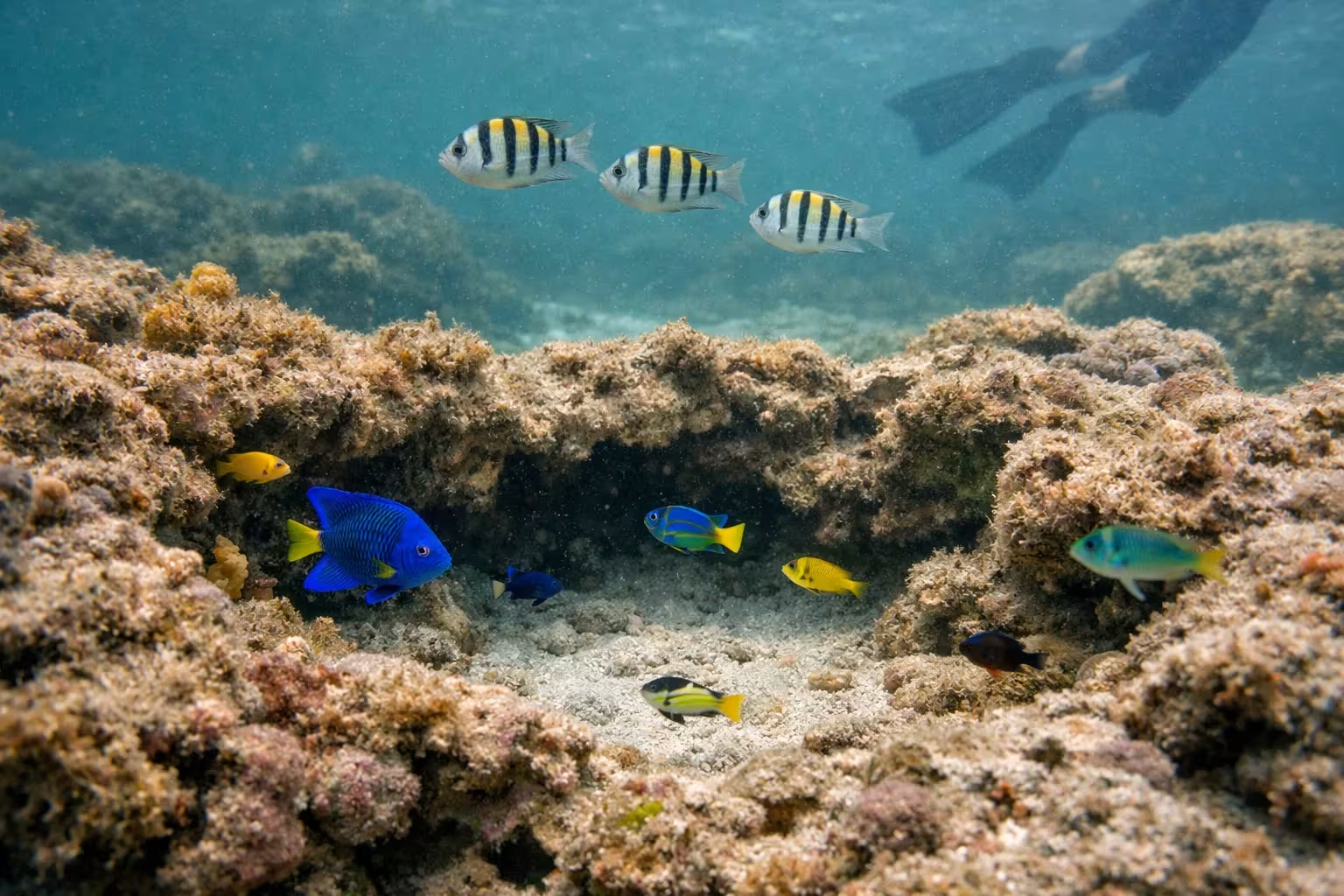
Hard corals reaching 3 to 4 feet on the second reef create a three-dimensional landscape full of life. You'll see the classic Caribbean cast — parrotfish, angelfish, butterflyfish, wrasses. The potholes area east of the Shipwreck Trail is a juvenile fish nursery and excellent for macro photography.
The shallow depths mean long bottom times. You can hover in one spot and actually watch fish behaviour rather than racing a dive computer.
The bigger encounters
Sea turtles frequent these reefs and often tolerate divers at close range. Nurse sharks cruise through periodically. Southern stingrays glide over the sand between reef patches, and barracuda patrol the edges.
Photography: Good visibility and calm conditions make this a strong site for underwater photography, whether you're shooting on an action camera or a full housing.
Planning your dive trip
Getting there
Fort Lauderdale-Hollywood International (FLL) takes direct flights from across the country and sits about 30 minutes from the town. With a morning flight, you can dive the same day. Driving in, the town is straightforward to reach via I-95 or A1A.
Where to stay
Castle by the Sea is a 16-room beachside motel in the heart of the village, within walking distance of the Datura Avenue Portal. For a diver, that matters more than it sounds: you can gear up, walk to the water, dive at first light, and be back before the meters even matter.
- Walk to the entry points — no driving with tanks, no parking meters
- Gold Coast Scuba is a short walk on Commercial Boulevard for fills and rentals
- Rinse and dry your gear on site, with the pool deck and grills for the evening
- Restaurants around the corner for the post-dive meal
Check rates and book your stay at Castle by the Sea.
Documentation
Current PADI or SSI certification is recognised without additional paperwork. Bring both basic and advanced cards if you hold multiple levels, and keep digital copies on your phone. If you plan to spearfish or take lobster, you'll need a Florida fishing licence — available online through the FWC.
Diving costs and packages
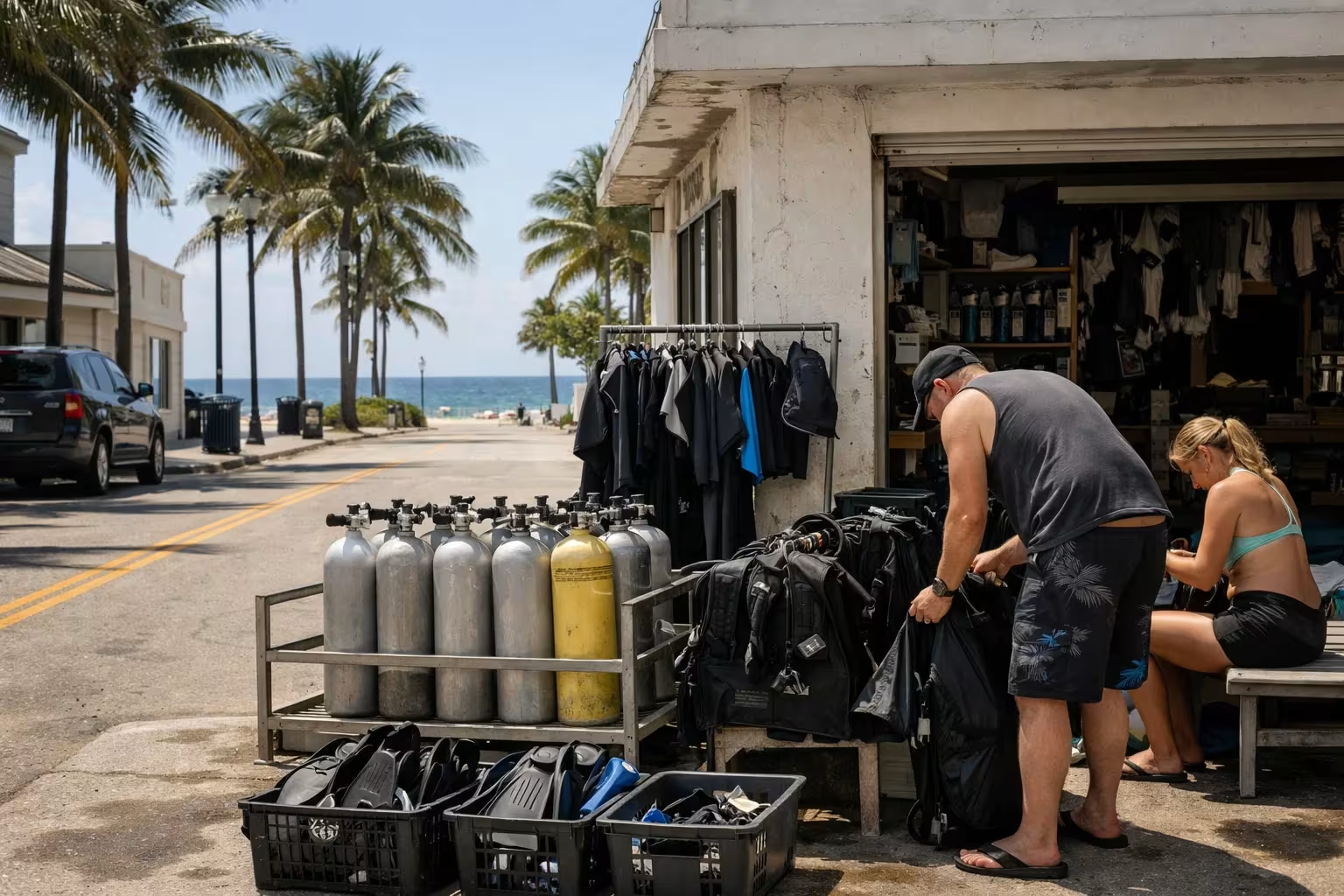
Shore diving eliminates boat fees, which is where most of the savings come from.
| Service | Typical cost | Best for |
|---|---|---|
| Tank fill | $10–$15 | Divers with their own gear |
| Full equipment rental (day) | $40–$60 | Travelling light |
| Guided shore dive | $50–$80 | First-time visitors |
| Two-tank boat dive (SS Copenhagen) | $100–$150 | Wreck divers |
For multi-day trips, weekly rental packages usually beat daily rates. Several shops bundle rental, guided dives, and fills together — worth asking about if you're diving more than two or three days.
Budget tip: Package deals combining rental, guided dives, and fills often save 20 to 30% compared with buying each service separately. Ask when you book rather than paying per dive.
Safety and local regulations
The dive flag requirement
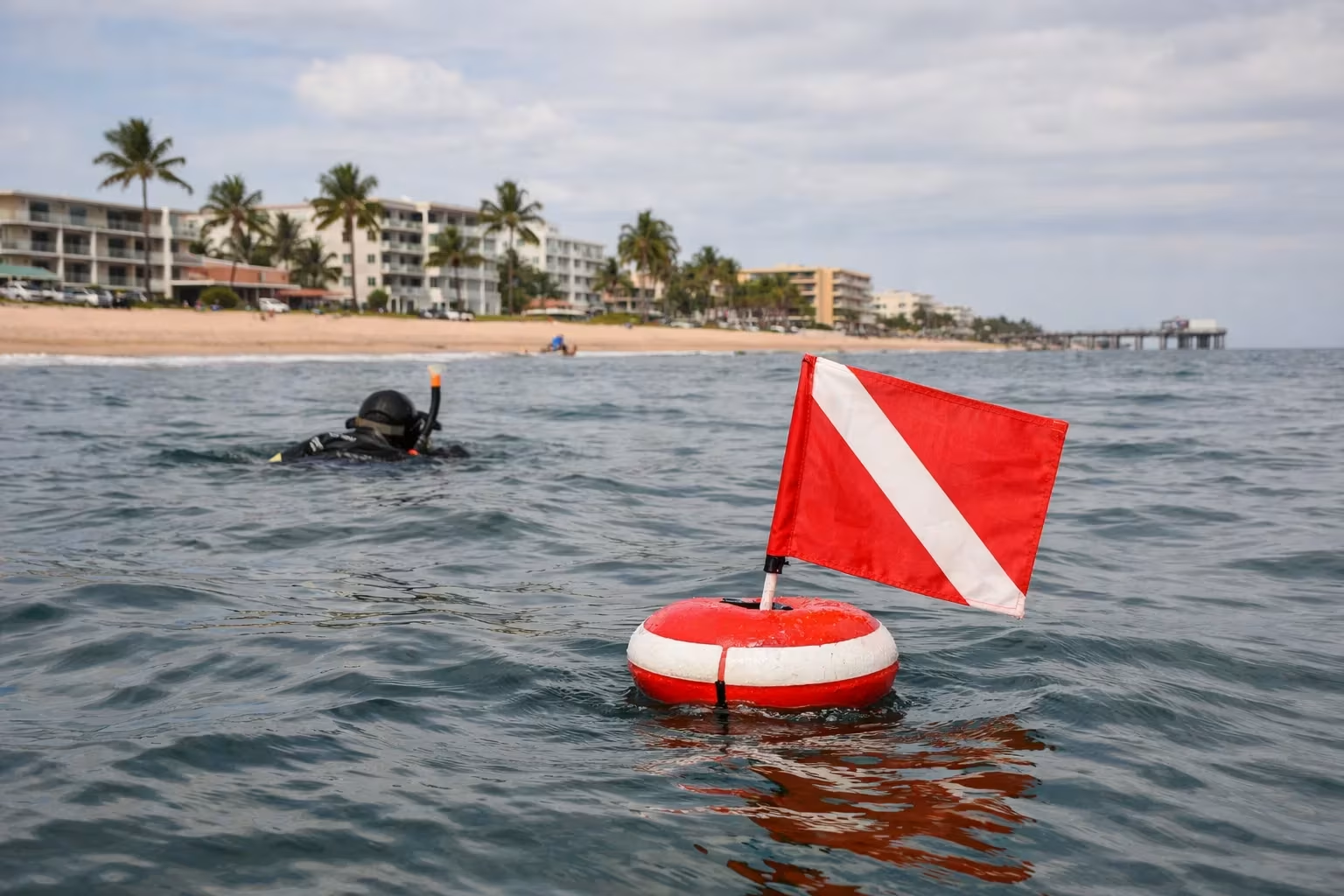
Required by Florida law: All divers and snorkellers must display a red diver-down flag whenever they're in the water. Gold Coast Scuba rents them if you don't have one.
Emergency procedures
Local operators maintain established protocols with the Coast Guard and nearby medical facilities, and Fort Lauderdale's proximity means access to hyperbaric chambers and diving medicine specialists. That said, the shallow depths at most sites here substantially reduce decompression risk. Most dive shops carry emergency oxygen and first aid equipment with trained staff.
Marine protection
The reefs here are protected, with restrictions on coral contact, fish feeding, and collecting marine life or artifacts. The SS Copenhagen carries additional rules as an Archaeological Preserve, including a prohibition on removing artifacts and anchoring restrictions for boats.
Practically: maintain neutral buoyancy so you don't contact the coral, use the established entry and exit points, and dive within your certification limits.
More ways to get on the water: Between dives, there's paddleboarding and kayaking through the Middle River and the mangroves, jet ski and parasailing up the coast, and deep sea fishing if you'd rather be on the water than under it.
Dive at first light, walk back for breakfast
The best conditions here are early, before the wind picks up and the meters fill. Staying in the village means gearing up at the door, walking to the Datura Avenue Portal, and being on the reef while everyone else is still looking for parking.
Frequently asked questions
No. Open Water Diver certification covers most dive sites here. The shallow reef systems at 8 to 20 feet are well within Open Water limits. Advanced certification is only needed if you want deeper offshore sites or more demanding boat dives.
Full equipment rental runs about $40 to $60 per day, with tank fills at $10 to $15. Weekly packages usually cost less than daily rates. Contact Gold Coast Scuba directly for current pricing and multi-day deals.
No. The SS Copenhagen sits about three-quarters of a mile offshore in 16 to 31 feet of water and requires a boat. Gold Coast Scuba runs trips to the wreck, and you can pair it with a shore dive the same day.
Diving works year-round thanks to the Gulf Stream. Winter, December through March, brings pleasant weather and calmer conditions that many divers prefer. Summer offers the warmest water but more humidity and occasional afternoon thunderstorms.
Yes. The Datura Avenue Portal is ideal for newer divers — shallow depths of 8 to 20 feet, minimal current, and straightforward beach access. The Shipwreck Snorkel Trail in 10 feet of water is a good confidence-builder before moving to the reef.
Equipment rental and shore diving rarely need advance booking outside peak season. Boat dives to the wreck and guided dives should be booked two to three days ahead during winter, when demand is highest.
No. The first reef and the Shipwreck Snorkel Trail are both shallow enough to enjoy with just a mask, snorkel, and fins — no certification, no tank. See our snorkeling guide for the shallow sites, gear, and guided tours.